
Last updated on September 29th, 2026 at 07:58 am
Every hard decision you face eventually asks the same question: what matters most, and what will you do about it when it costs you? Your core values answer the first half, and your core life principles answer the second half.
Core values are the things you consider most important, while core principles are the rules of conduct you use to honor them.
Together they guide how you handle challenges, build relationships, make decisions, and become the person you hope to be.
This guide covers the foundational, ethical, and growth principles that build character, alongside the four types of life values: personal, social, lifestyle, and achievement.
You will also learn how to identify your own values and principles and live by them under pressure.
I begin with the two lessons from my father that first taught me why principles truly matter.
Table of Contents
What Are Core Life Principles and Values?
Psychologist Shalom Schwartz defines values as desirable goals that vary in importance and act as guiding principles across the situations of a person’s life.
Values answer the question of what matters, such as honesty, family, freedom, or security.
Principles answer the question of how you will act because of those values, and they are usually stated as rules you commit to.
If you value honesty, for example, a principle might be “I tell the truth even when it costs me something.”
Author Stephen Covey argued in Principle-Centered Leadership that true principles, like fairness and honesty, work like natural laws across cultures and eras.
Why You Should Be Curious about Core Life Principles
Values act as a compass when rules, habits, and other people’s opinions offer no clear direction.
Research on values affirmation, reviewed in Frontiers in Psychology, shows that briefly reflecting on an important personal value can lower stress reactivity and reduce rumination after failure.
A 2025 meta-analysis of more than 17,700 participants, summarized in Psychology Today, found modest but real improvements in well-being from self-affirmation exercises.
In my experience, knowing your values also removes much of the second-guessing that follows hard choices.
Foundational Core Life Principles
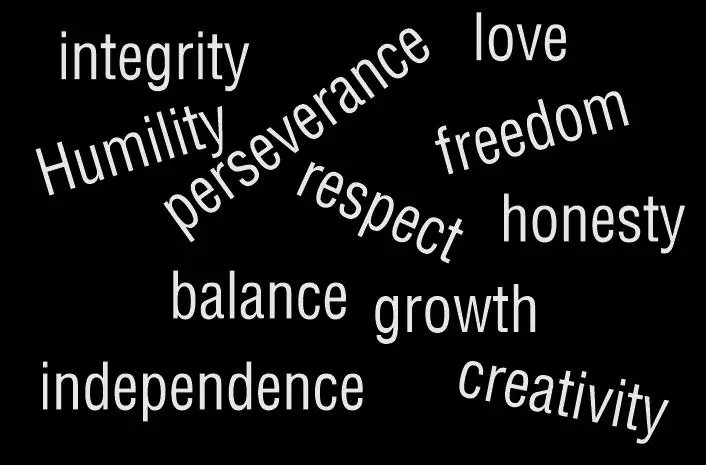
These five principles form the base that every other principle rests on.
Integrity and Honesty
Integrity means acting in line with your principles when nobody is watching, and honesty means your words match what is true.
Together they build trust, because people learn they can rely on what you say and do.
Our guide to integrity in relationships shows how this principle plays out in daily conduct with others.
Responsibility and Accountability
Responsibility means owning your choices instead of blaming circumstances, and accountability means holding yourself to the standard you set.
When you admit and repair mistakes quickly, you grow faster and earn respect that excuses never buy.
Discipline and Consistency
Discipline is doing what you committed to when you no longer feel like it, and consistency is repeating it daily.
In my observation, steady effort outperforms occasional bursts of talent in health, work, and relationships alike.
Resilience and Adaptability
Resilience helps you recover from setbacks, while adaptability helps you change course when your original plan stops working.
Holding firm principles and flexible methods lets you stay the same person while adjusting how you pursue your goals.
Self-Respect and Boundaries
Self-respect means refusing treatment you would never accept for a close friend, and boundaries put that refusal into practice.
Our guide to emotional boundaries explains how to protect your peace without pushing good people away.
Ethical and Social Principles
These principles govern how you treat others, and they decide the quality of your relationships and communities.
- Fairness and justice mean applying the same standard to everyone, including people you dislike and situations where bending the rules would help you.
- Compassion and empathy let you see what others are carrying and respond with kindness, a skill our guide to empathy covers in depth.
- Loyalty and trustworthiness reassure people that you will stand by them and keep what they share in confidence.
- Humility and gratitude keep you teachable and grounded, turning your attention from what you lack to what you have been given.
- Respect and tolerance mean valuing people whose views differ from yours and listening without contempt, even in firm disagreement.
- Service and leadership mean using whatever influence you have to lift others, since real leadership rests on example rather than control.
Principles of Growth and Self-Mastery
Growth principles turn good intentions into a better character, one practiced habit at a time.
- Lifelong learning: stay curious and teachable, since every book, person, and mistake can widen how you see the world.
- Emotional intelligence: notice what you feel before you act, so you respond thoughtfully instead of reacting on impulse.
- Self-belief: trust that you can work things out, and build that trust through small goals you actually complete.
- Mindfulness: give full attention to the present moment, which clears your thinking and reduces the pull of distraction.
Our guide to emotions explains how feelings arise and why managing them sits at the heart of self-mastery.
The Four Types of Life Values
Values can be grouped in many ways, and the four categories below cover the areas most people care about.
They overlap in practice, since a single value like honesty can guide your personal life, relationships, and career at once.
1. Personal Values

Personal values are the beliefs that define your character and guide how you treat yourself and others.
Common examples include honesty, integrity, compassion, courage, humility, gratitude, perseverance, authenticity, and responsibility.
These values are formed by upbringing, culture, faith, and experience, and they tend to stay fairly stable across adulthood.
2. Social Values

Social values are the shared ideals a community or society considers important for living well together.
Examples include justice, equality, respect for others, tolerance, freedom, civic duty, generosity, and care for the vulnerable.
The World Values Survey, run since 1981 across more than 120 countries, tracks how these shared values differ between societies and change across generations.
Your social values decide how you treat strangers, vote, volunteer, and respond when someone in your community needs help.
3. Lifestyle Values

Lifestyle values describe how you want to live day to day, including how you spend your time, money, energy, and attention.
Examples include health, balance, simplicity, adventure, freedom, family time, faith practice, and connection with nature.
These values show up in concrete choices, such as where you live, how hard you work, and what you do with free evenings.
When your schedule and bank statement contradict your stated lifestyle values, the schedule usually reveals what you truly prioritize.
4. Achievement Values
Achievement values concern success, competence, and growth, and they drive how you approach work, learning, and ambition.
Examples include excellence, mastery, recognition, discipline, influence, creativity, financial security, and continuous learning.
Achievement is one of ten basic values in Schwartz’s theory, which researchers have tested with findings from 82 countries.
The theory also places achievement in tension with values like benevolence, which helps explain why ambition and generosity sometimes compete.
Our life goals guide shows how to turn achievement values into goals that serve your whole life, not just your career.
How to Identify Your Core Values and Principles
1. Recall Your Proudest and Angriest Moments
Think of times you felt proud, and times you felt angry or ashamed, then ask which value was honored or violated in each.
2. Shortlist and Rank
Write down every value that resonates, then cut the list to your top five by asking which you would keep if forced to choose.
3. Check Values Against Your Behavior
Compare your top values with how you actually spend time and money, since behavior reveals priorities more honestly than intentions do.
4. Separate Your Values From Borrowed Ones
Ask if each value is truly yours or one you absorbed from parents, peers, or social media without ever examining it. Self-awareness and regular self-reflection make this honest sorting much easier and more accurate.
5. Turn Each Value Into a Principle
For every top value, write one principle beginning with “I will” or “I will not,” and test it against a real decision this week.
Living Your Principles and Values Every Day
In Your Decisions
Clear values act as a filter, letting you measure each option against what matters instead of what is loudest or easiest.
Imagine being offered a promotion that requires moving to another city, far from your family and close friends.
If family sits at the top of your values, staying may be right, while someone who ranks achievement first may rightly go.
Neither choice is wrong, but a choice made against your own values tends to breed regret.
Before a major decision, ask one plain question: does this choice reflect the values I have said matter most?
In Your Relationships
Shared values make relationships easier, because partners and friends who agree on honesty or respect rarely need to justify basic choices.
Conflicting values create friction, such as one partner prizing financial caution while the other spends on impulse.
Our love life guide shows how shared values support lasting romantic relationships.
In Your Career
In my observation, work that clashes with your values can feel empty even when it pays well, while aligned work sustains you through hard seasons.
If you value helping others, fields like healthcare, teaching, or social work may fit, while creativity may point toward design or writing.
Our guide to professional boundaries explains how to protect your values once you are inside a workplace.
Staying True to Your Principles Under Pressure
Values are easy to hold when nothing is at stake, so plan for the pressures most likely to test them.
- Peer pressure: spend more time with people who respect your principles, and less with those who mock them.
- Social expectations: define success in your own terms instead of borrowing society’s measures of status, wealth, and recognition.
- Self-doubt: keep your written list of values somewhere visible and reread it when a choice makes you waver.
- Small compromises: watch for minor exceptions that repeat, because repeated exceptions quietly become your real values.
Every time you choose your values over convenience, you strengthen the integrity that makes the next choice easier.
When Principles and Values Conflict or Change
Schwartz’s research found that values form a circular structure in which some values naturally conflict, a pattern that appears across cultures.
Loyalty to a friend may clash with honesty about their behavior, and ambition may clash with rest.
When values conflict, rank them for that specific situation, choose deliberately, and accept that honoring one value sometimes means sacrificing another.
In my observation, the regret people carry comes less from hard trade-offs than from trade-offs they never consciously made.
Value priorities can also shift with life stages and events like parenthood, loss, or a career change, so review them every year or two.
Your Principles Become Your Legacy
Every daily choice adds to the legacy you leave, because people remember how you treated them long after they forget your achievements.
Children and younger colleagues learn more from watching how you handle adversity than from anything you tell them.
Mentoring, volunteering, and simply being reliable extend your principles beyond your household into the wider community.
Our article on life lessons and our guide on how to live show how these choices add up across a lifetime.
Conclusion
Core values tell you what matters, and core principles tell you how to act on it when pressure, temptation, or convenience pulls the other way.
Integrity, responsibility, discipline, fairness, and compassion give your life a steady foundation, while your personal, social, lifestyle, and achievement values give it direction.
As my father taught me, these are choices you remake daily, especially when nobody is watching.
This week, name your top five values, write one principle for each, and test them against the next hard decision you face at work or home.
Frequently Asked Questions
What are the core principles of life?
Core principles of life are fundamental rules of conduct, such as integrity, responsibility, discipline, fairness, and compassion, that guide your decisions, relationships, and growth in almost every situation.
What is the difference between values and principles?
Values describe what matters to you, such as honesty, while principles describe how you will act because of it, such as never lying just to avoid personal discomfort.
What are the four types of life values?
The four main types are personal values like honesty or kindness, social values like justice, lifestyle values like health or simplicity, and achievement values like mastery or excellence.
How do I identify my core values?
Reflect on moments of pride and anger, list the values involved, rank your top five, compare them with how you spend time, and turn each into a principle.

Pious Clements writes about character, conduct, and the deeper questions of how a life is lived. He is the founder of The Conducts of Life, a site built on the belief that how you behave, not what you achieve, defines who you are. His writing draws from decades of observation, lived experience, and serious thinking about human nature, ethics, and self-development. He writes to be useful, not popular.