
Last updated on October 2nd, 2026 at 01:45 pm
A Toledo mechanic keeps three books in his toolbox: Marcus Aurelius, Confucius, and Thoreau. On hard days, he says, they help more than any podcast.
Philosophy for everyday living is the practice of using humanity’s oldest wisdom traditions to make better daily choices, handle hardship, and live with meaning.
The Toledo mechanic is not an academic; he simply found that ideas tested over thousands of years still work on a Tuesday afternoon when a customer is shouting.
From Socrates and Confucius to the Stoics, the Buddha, and Emerson, thinkers across cultures asked the same practical question: how should a person live?
This pillar explains what practical philosophy is, introduces ten major traditions and their everyday lessons, shows the threads they share, and offers simple ways to bring them into your own life.
Table of Contents
What Is Practical Philosophy?
The word philosophy comes from Greek roots meaning “love of wisdom.”
For most of history, philosophy was not just an academic subject but a way of life, a set of habits for thinking clearly, acting well, and facing death without fear.
French scholar Pierre Hadot made this point powerfully, arguing that ancient philosophical schools were training programs for the soul as much as systems of ideas.

Practical philosophy keeps that original purpose. It asks what is worth wanting, how to treat others, how to handle what you cannot control, and how to find meaning.
You do not need a degree to use it. You need a few good ideas, a willingness to test them, and the patience to practice.
A Brief History of Practical Wisdom
Remarkably, many of the world’s great wisdom traditions emerged within a few centuries of one another.
Between roughly 800 and 200 BCE, Confucius and Lao Tzu taught in China, the Buddha taught in India, Hebrew prophets reshaped religious ethics, and Socrates questioned his fellow Athenians.
The philosopher Karl Jaspers called this period the Axial Age, because so much of humanity’s moral thinking seemed to turn on it.
Later centuries added new voices. Roman Stoics turned Greek ideas into daily practice, medieval thinkers blended philosophy with faith, and modern writers such as Emerson, Kierkegaard, and Frankl addressed the pressures of industrial and modern life.
Each generation inherited old questions and found fresh ways to answer them.
Why Ancient Wisdom Still Works
Human nature has changed far less than technology. People in ancient Athens, China, and India worried about money, status, illness, loss, and difficult relatives, just as people do today.
The traditions that survived did so because generations found them useful.
Modern psychology has confirmed several of these old insights.
Cognitive behavioral therapy draws on the Stoic idea that our judgments drive our emotions, and on Socratic questioning to test unhelpful beliefs.
Research on meaning also echoes ancient advice.
A 2013 study by Roy Baumeister and colleagues found that a sense of meaning was linked to giving to others and thinking about past and future, while momentary happiness was linked more to taking and to the present.
Ancient philosophers would not have been surprised: most taught that a good life comes from contribution and character, not just pleasure.
Ten Wisdom Traditions for Everyday Life
1. Socrates and the Examined Life
Socrates taught in Athens by asking questions that exposed weak assumptions. Plato records him saying that the unexamined life is not worth living.

His method, now called Socratic questioning, asks: What do I mean? How do I know? What might I be missing?
Everyday lesson: Question your own beliefs before defending them. Regular reflecting on your life honestly keeps your thinking clear.
2. Aristotle and Virtue as Habit
Aristotle argued that the goal of life is eudaimonia, or flourishing, and that good character is built through practice.
In W. D. Ross’s translation, he wrote that “we become just by doing just acts, temperate by doing temperate acts, brave by doing brave acts.”
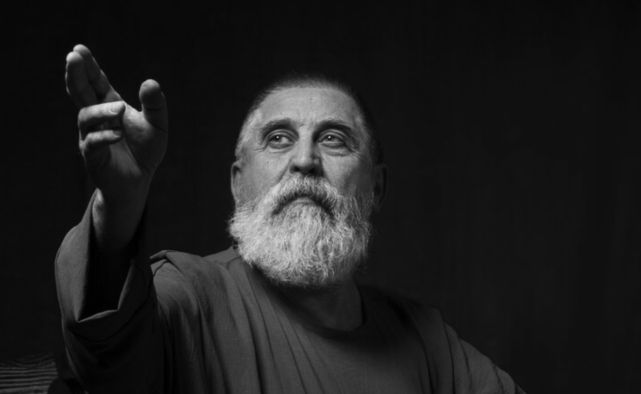
He also described virtue as a mean between extremes, such as courage between cowardice and recklessness.
Everyday lesson: Become the person you want to be by acting like that person, one choice at a time.
3. Stoicism and the Dichotomy of Control
The Stoics, including Epictetus, Seneca, and Marcus Aurelius, taught that peace comes from concentrating on what is within your control and accepting the rest, while living by wisdom, courage, justice, and temperance.
Their ideas are explained in what Stoicism teaches, with its core ideas in ten core Stoic principles and its virtues in the four Stoic virtues.
Everyday lesson: Before reacting, ask, “What here is within my control?”
4. Epicureanism and Simple Pleasures
Epicurus is frequently misread as recommending indulgence, but he taught nearly the opposite.
In his Letter to Menoeceus, he defined pleasure as the absence of pain in the body and of trouble in the soul.
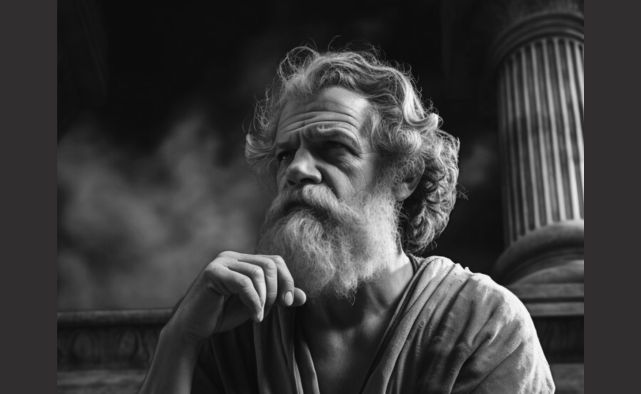
He prized friendship, simple food, and a quiet mind over luxury.
Everyday lesson: Enjoy simple things fully, and invest in friendships rather than possessions.
5. Confucius and Right Relationships
Confucius taught that a good life is built through self-cultivation, respect, and harmonious relationships with family, friends, and community.
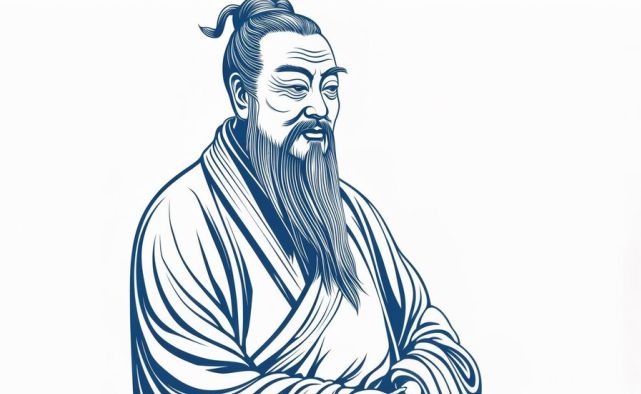
In James Legge’s translation of the Analects, he stated a version of the Golden Rule: “What you do not want done to yourself, do not do to others.”
The Stanford Encyclopedia of Philosophy offers a detailed overview of his thought.
Everyday lesson: Treat each relationship, from parent to coworker, as a place to practice virtue.
6. Taoism and Effortless Action
The Tao Te Ching, attributed to Lao Tzu, teaches harmony with the natural flow of life, simplicity, and wu wei, a kind of effortless action that avoids forcing outcomes.
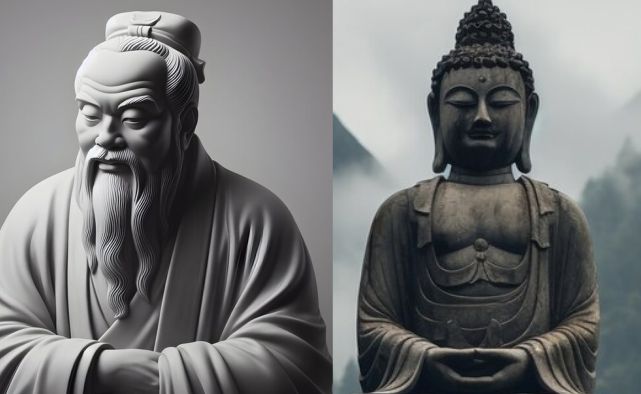
In Legge’s translation, it says, “The highest excellence is like (that of) water,” which nourishes everything and flows around obstacles without fighting them.
Everyday lesson: When you meet resistance, look for the path that requires less force.
7. Buddhism and Mindful Awareness
The Buddha taught the Four Noble Truths: life involves suffering, suffering arises from craving and attachment, suffering can end, and a path of wisdom, ethics, and meditation leads there.
Buddhism emphasizes impermanence and compassion, and its practices underlie much of modern mindfulness, as explained in the practice of mindfulness.
Everyday lesson: Notice cravings and attachments without obeying them automatically.
8. Ubuntu and Shared Humanity
Ubuntu, a philosophy rooted in Southern African cultures, is captured in the Nguni saying “umuntu ngumuntu ngabantu,” commonly rendered as “a person is a person through other persons.”
Archbishop Desmond Tutu helped bring it to global attention, especially during South Africa’s reconciliation process.
Everyday lesson: See your well-being as tied to the well-being of others, and act with generosity.
9. Existentialism and Chosen Meaning
Existentialist thinkers, including Søren Kierkegaard and Viktor Frankl, emphasized personal responsibility for creating meaning.
Frankl, who survived Nazi concentration camps, argued that people can choose their attitude even in the worst circumstances.
Everyday lesson: When life feels meaningless, ask what responsibility or relationship is calling you.
10. Transcendentalism and Self-Trust
Ralph Waldo Emerson and Henry David Thoreau taught Americans to trust their own minds, find spirit in nature, and live simply.
Their movement is explained in the transcendentalist movement, Emerson’s thought in Emerson’s life and legacy, and his most famous essay in Emerson’s case for self-trust.
Everyday lesson: Form your own view before adopting the crowd’s.
Comparing the Traditions
| Tradition | Core Idea | Simple Daily Practice |
|---|---|---|
| Socratic | Examine your beliefs | Ask “How do I know?” once a day |
| Aristotelian | Virtue is built by habit | Practice one virtue deliberately |
| Stoic | Control what you can; accept the rest | Morning control check |
| Epicurean | Simple pleasures and friendship | Share a simple meal with a friend |
| Confucian | Right relationships | Show respect in one difficult relationship |
| Taoist | Flow, not force | Choose the gentler approach in a conflict |
| Buddhist | Awareness of craving | Five minutes of mindful breathing |
| Ubuntu | Shared humanity | One act of generosity daily |
| Existentialist | Create meaning through responsibility | Name one purpose for your day |
| Transcendentalist | Trust yourself, honor nature | A phone-free walk outdoors |
Common Threads Across Traditions
Despite their differences, these traditions share striking common ground.
Nearly all value self-mastery, the ability to govern impulses rather than be governed by them.
Most praise simplicity and warn that chasing wealth, status, or pleasure brings restlessness rather than peace.
Many emphasize attention to the present moment. All treat relationships and our treatment of others as central to a good life.
They also share a balance between acceptance and action: accept what cannot be changed, and act wholeheartedly on what can.
Finally, they agree that character matters more than circumstance, a theme explored in the principles you live by and in how a moral compass works.
Wisdom for Life’s Common Challenges
Facing Loss
Stoicism teaches that loved ones are on loan from life, which deepens gratitude while they are here.
Buddhism adds that impermanence is natural, so grief can be held with compassion rather than resistance.
Handling Conflict
Confucius encourages respect even in disagreement, while Taoism suggests that softness, like water, often outlasts force. Together they recommend calm, patient firmness.
Making Decisions
Socratic questioning clarifies what you actually believe, and Aristotle’s idea of the mean helps you avoid extremes, such as recklessness or excessive caution.
Finding Purpose
Frankl and Emerson both suggest that purpose is found through responsibility, creativity, and service, rather than waiting for it to arrive.
Managing Stress
The Stoic question of control and the Buddhist practice of mindful breathing are two of the fastest, most reliable tools for calming a racing mind.
How to Bring Philosophy Into Daily Life

Start Your Day With Intention
Spend two minutes each morning naming one challenge you expect and the virtue or principle you will practice in meeting it.
End Your Day With Review
Each evening, ask what you did well, where you fell short, and what you will try tomorrow, a practice shared by Stoics, Confucians, and many religious traditions.
Practice One Idea at a Time
Choose a single principle, such as the dichotomy of control or the Golden Rule, and practice it for a week before adding another.
Read the Original Sources
Short, accessible classics include Marcus Aurelius’s Meditations, the Analects, the Tao Te Ching, Epictetus’s Enchiridion, and Emerson’s essays. Many are free in older public-domain translations.
Think Independently
Test ideas against your own experience rather than accepting them on authority, a habit described in thinking for yourself.
Keep Wisdom Close
Short sayings can anchor practice during hard moments. Collections such as the best Stoic quotes explained, quotes about living well, and quotes that build inner strength offer verified lines with their meaning.
Choosing a Philosophy That Fits You
You do not need to adopt a single tradition. Many people find that Stoicism suits them at work, Buddhist mindfulness helps with anxiety, Confucian ideas guide family life, and Emerson inspires independence.
Begin with the tradition whose questions match your current struggles. If you feel overwhelmed by things outside your control, start with Stoicism.
If you feel scattered and restless, try mindfulness or Taoism. If relationships feel strained, explore Confucius or Ubuntu.
If life feels directionless, read Frankl or Emerson. As your life changes, the tradition that speaks to you may change too, and that flexibility is a strength.
Cautions When Using Philosophy
Philosophy is powerful, but it can be misused. Cherry-picking quotes without context can distort what thinkers meant, and online versions sometimes reduce rich traditions to slogans.
Some ideas, such as Stoic acceptance, can be twisted into passivity or emotional suppression.
Ancient thinkers also held views typical of their eras, including on gender and slavery, that modern readers rightly reject.
Finally, philosophy supports well-being but does not replace professional help for serious mental health conditions.
Spiritual and philosophical practices work best alongside healthy relationships, rest, and, when needed, medical care, as discussed in nurturing meaning through spiritual self-care.
Timeless Wisdom Topics at a Glance
| Topic | What It Covers | Read More |
|---|---|---|
| Stoicism | The Stoic philosophy of control and virtue | Stoicism explained |
| Transcendentalism | Emerson, Thoreau, and self-trust | American transcendentalism |
| Emerson | His life, ideas, and legacy | a portrait of Emerson |
| The Conduct of Life | Emerson’s practical guide to living | Emerson’s guide to living well |
| Stoic quotes | Verified Stoic sayings with meaning | Stoic wisdom in quotes |
| Life quotes | Wisdom on time, meaning, and change | verified quotes about life |
| Strength quotes | Wisdom for hard times | verified quotes about strength |
Conclusion
The Toledo mechanic’s three books cost less than a tank of gas, yet they give him steadiness that no gadget can.
Philosophy for everyday living draws on traditions from Socrates and Confucius to the Stoics, the Buddha, Ubuntu, and Emerson, each offering practical tools for self-mastery, simplicity, relationships, and meaning.
These traditions share a common message: character matters more than circumstance, and wisdom grows through daily practice.
In my observation, the people who benefit most from philosophy are not those who read the most, but those who test one idea at a time in ordinary life.
This week, choose one tradition from this guide and practice its daily lesson for seven days.
Frequently Asked Questions
What is practical philosophy?
Practical philosophy is the use of wisdom traditions to make better daily choices, handle hardship, and live with meaning, rather than studying ideas only in theory.
Which philosophy is best for everyday life?
No single philosophy is best; Stoicism helps with stress, Buddhism with awareness, Confucianism with relationships, and existentialism with meaning, depending on your needs.
How can I start practicing philosophy?
Begin with one idea, such as the Stoic dichotomy of control, practice it daily for a week, and read a short classic such as Marcus Aurelius’s Meditations.
Do ancient philosophies still apply today?
Yes, human concerns have changed little, and modern psychology, including cognitive behavioral therapy, draws directly on ancient insights.

Pious Clements writes about character, conduct, and the deeper questions of how a life is lived. He is the founder of The Conducts of Life, a site built on the belief that how you behave, not what you achieve, defines who you are. His writing draws from decades of observation, lived experience, and serious thinking about human nature, ethics, and self-development. He writes to be useful, not popular.