Last updated on October 2nd, 2026 at 01:09 pm
A Little Rock accountant noticed her manager shifting expenses to hit a target. Silence would have been easy. She spoke up, and the auditors later thanked her.
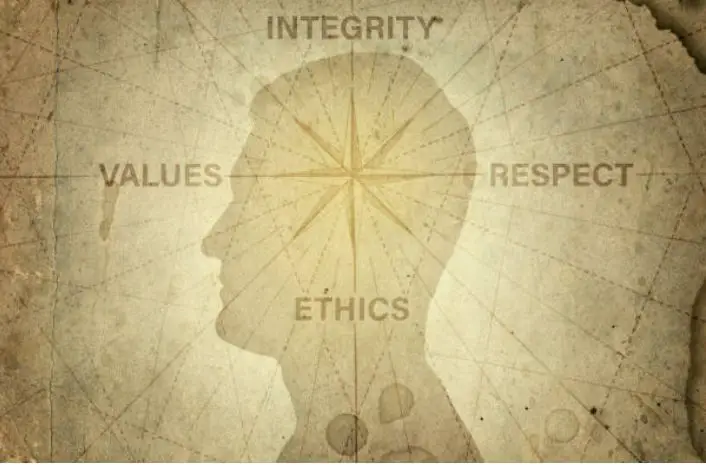
A moral compass is your inner sense of right and wrong, the set of values and instincts that guides your choices when rules are unclear.
The Little Rock accountant did not need a policy manual to know that hiding expenses was wrong; her compass pointed clearly, even under pressure.
Research shows that everyday pressures, rationalizations, and small compromises can quietly pull that compass off course.
The sections below explain what a moral compass is, where it comes from, what weakens it, and practical ways to keep yours steady.
Everyone has one; the question is how well it is maintained.
Table of Contents
What Is a Moral Compass?
The phrase compares conscience to a navigator’s compass, which points north no matter which way the ship turns.
Your moral compass is the combination of values, conscience, and judgment that helps you choose rightly in new or confusing situations.
It works both as a gut feeling, the sense that something is wrong, and as reasoning, the ability to explain why.
Your deeper values are explored in the principles that guide your life.
| Term | Meaning |
|---|---|
| Moral compass | Your inner guide for choosing right over wrong |
| Values | What you consider important, such as honesty or family |
| Conscience | The inner voice that approves or condemns your actions |
| Morals | Personal or cultural beliefs about right and wrong |
| Ethics | Formal principles or codes, such as professional ethics |
| Conduct | How you actually behave, judged against these standards |
Conduct, the outward expression of your compass, is explained in the meaning of conduct.
Where a Moral Compass Comes From
- Nature: Humans appear to have built-in moral intuitions, such as caring for others and noticing unfairness, which psychologists see across cultures.
- Upbringing: Parents and caregivers teach right and wrong through example, correction, and conversation.
- Culture and community: Societies emphasize different values, such as individual rights or group loyalty.
- Religion and philosophy: Faith traditions and philosophies such as Stoicism offer moral frameworks, including the classical cardinal virtues.
- Experience: Mistakes, consequences, and relationships refine moral judgment throughout life.
How Moral Development Works
Psychologist Lawrence Kohlberg proposed that moral reasoning develops through three broad levels.
At first, people judge right and wrong by rewards and punishments; later, by social rules and approval; and finally, for some, by universal principles of justice.
Psychologist Carol Gilligan argued that Kohlberg’s model underweighted an ethic of care, centered on relationships and responsibility, which many people use alongside principles of justice.
| Kohlberg Level | Basis of Moral Judgment | Example Reasoning |
|---|---|---|
| Preconventional | Rewards and punishment | “I won’t cheat because I might get caught.” |
| Conventional | Rules and approval | “I won’t cheat because it breaks the rules.” |
| Postconventional | Universal principles | “I won’t cheat because it’s unfair to others.” |
What Research Shows
Moral foundations theory, developed by Jonathan Haidt and colleagues, proposes that people draw on several moral intuitions, including care, fairness, loyalty, authority, sanctity, and liberty.
People and cultures weigh these foundations differently, which helps explain why sincere people can disagree about moral questions.
Research on moral licensing suggests that doing something good can make people slightly more willing to cut corners afterward.
A 2015 meta-analysis by Irene Blanken and colleagues found the effect was real but small.
Psychologist Albert Bandura also described moral disengagement, the mental tricks, such as blaming victims or calling harm “collateral,” that let people act against their values without feeling guilt.
What Weakens a Moral Compass
- Pressure: Deadlines, targets, and fear of losing a job push people toward shortcuts.
- Rationalization: Thoughts like “everyone does it” or “it’s not really hurting anyone” disable the warning signal.
- Small steps: Minor compromises make the next, bigger one feel normal.
- Ethical fading: When a decision is framed as purely business or practical, its moral side can disappear from view.
- Group norms: If everyone around you crosses a line, it can stop looking like a line.
- Fatigue and stress: Tired, stressed people find it harder to resist temptation.
Signs Your Moral Compass Is Strong
- You act the same whether or not anyone is watching.
- You can explain your values and why they matter.
- You feel uneasy when you cut corners, and you correct course.
- You admit wrongdoing and make amends.
- You stand up for others when it costs you something.
Signs It May Be Drifting
- You find yourself justifying things you once considered wrong.
- You avoid thinking about the consequences of your choices.
- You keep secrets about your behavior.
- You feel defensive when questioned.
- Your actions depend on who is watching.
How to Strengthen Your Moral Compass
1. Name Your Values
Write down your five most important values and one example of each in action.
2. Use the Newspaper Test
Ask how you would feel if your decision appeared on the front page.
3. Listen to Unease
Treat discomfort as data, a cue to stop and think rather than push through, an idea explored in the voice of intuition.
4. Think for Yourself
Do not assume something is right because the group accepts it, a skill developed in thinking independently under pressure.
5. Reflect Regularly
Review your choices weekly, noting where you acted on your values and where you did not, through honest weekly reflection.
6. Seek Wise Counsel
Talk through hard decisions with someone whose integrity you trust.
7. Practice in Small Moments
Return extra change, credit others, and keep small promises, since everyday choices train the compass for big ones, as explained in daily conduct habits.
Moral Gray Areas
Not every choice is clearly right or wrong; sometimes values collide, such as honesty and kindness, or loyalty and fairness.
In these moments, slow down, identify which values are in tension, consider who will be affected, and choose the option you could defend openly.
A strong compass does not remove hard choices, but it helps you make them with integrity.
Raising Children With a Strong Moral Compass
Children learn morality mostly by watching adults. Model honesty and kindness, explain the reasons behind rules, praise good choices, and discuss moral dilemmas from stories or daily life.
Allow them to make small mistakes and repair them, since owning errors builds conscience.
In my observation, people with the steadiest moral compasses are not the most rigid; they are the ones who keep checking it when it would be easier not to.
Conclusion
The Little Rock accountant’s choice cost her a tense week and earned her lasting trust.
A moral compass is your inner sense of right and wrong, built from nature, upbringing, culture, faith, and experience, and expressed through everyday conduct.
Research shows that pressure, rationalization, and small compromises can weaken it, while reflection, clear values, and small acts of integrity keep it steady.
This week, write down your five core values and check one daily decision against them.
Frequently Asked Questions
What is a moral compass?
A moral compass is your inner sense of right and wrong, combining values, conscience, and judgment to guide your choices.
Where does a moral compass come from?
It develops from innate moral intuitions, upbringing, culture, religion or philosophy, and life experience.
What is the difference between morals and ethics?
Morals are personal or cultural beliefs about right and wrong, while ethics are formal principles or codes, such as professional standards.
How can I strengthen my moral compass?
Name your values, listen to inner unease, think independently, reflect regularly, seek wise counsel, and practice integrity in small moments.

Pious Clements writes about character, conduct, and the deeper questions of how a life is lived. He is the founder of The Conducts of Life, a site built on the belief that how you behave, not what you achieve, defines who you are. His writing draws from decades of observation, lived experience, and serious thinking about human nature, ethics, and self-development. He writes to be useful, not popular.