Last updated on October 2nd, 2026 at 11:13 am
In 1832, a 29-year-old Boston minister resigned rather than perform a ritual he no longer believed in. He became America’s most influential essayist.
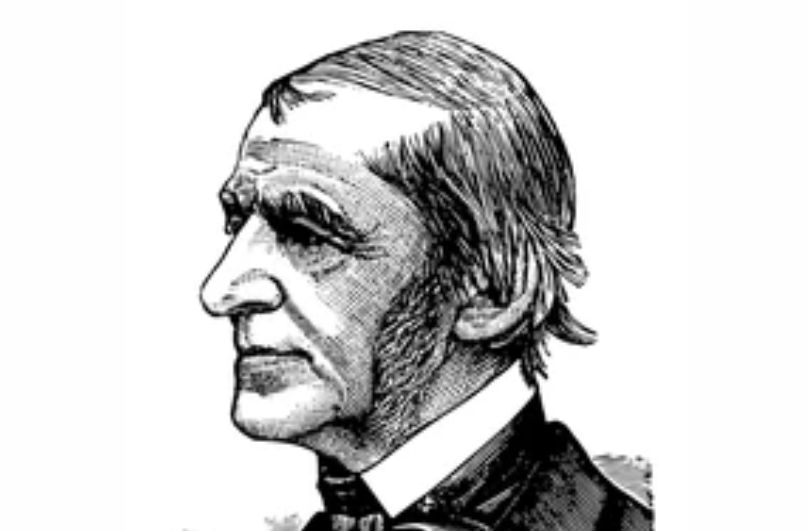
Ralph Waldo Emerson was an American essayist, lecturer, and poet who led the transcendentalist movement and urged people to trust themselves, find meaning in nature, and think independently.
His decision to leave the ministry cost him security and status, yet it freed him to write the essays that defined a new American voice.
Through works such as Nature, “Self-Reliance,” and The Conduct of Life, he influenced writers, reformers, and philosophers on several continents.
The sections below cover his life, core beliefs, major works, friendships, struggles, critics, and legacy.
They also link to deeper posts on his most important writing.
Table of Contents
Who Was Ralph Waldo Emerson?
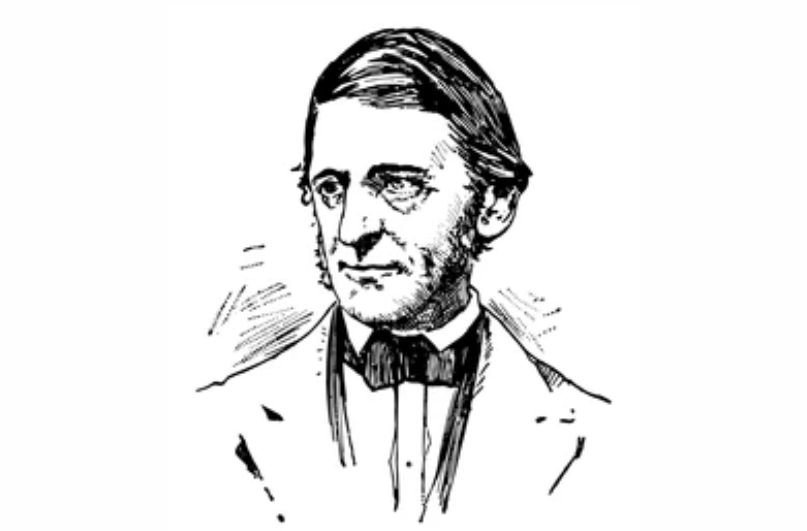
Emerson lived from 1803 to 1882 and spent most of his adult life in Concord, Massachusetts. He was the central figure of transcendentalism, a movement explained in the transcendentalist movement.
He earned his living mainly by lecturing across the country and publishing collections of essays drawn from those lectures.
The Stanford Encyclopedia of Philosophy treats him as a serious philosopher, though he never built a formal system.
He preferred short, striking sentences that provoke readers to think for themselves.
Early Life and Education
Emerson was born in Boston on May 25, 1803, the son of William Emerson, a Unitarian minister.
His father died in 1811, leaving the family with little money, and his mother kept the household together by taking in boarders.
His aunt, Mary Moody Emerson, a fiercely intelligent and devout woman, pushed him to read widely and think boldly, and he later credited her as a major influence.
He entered Harvard College at 14 and graduated in 1821 without special distinction.
He taught school for several years, a job he disliked, then studied for the ministry.
He began keeping journals in college and continued for most of his life, recording ideas that later became lectures and essays.
Those journals eventually filled many published volumes and show how carefully he worked out his thinking.
Ministry, Loss, and a Turning Point
In 1829, Emerson became junior pastor of Boston’s Second Church and married Ellen Tucker, whom he adored.
Ellen died of tuberculosis in 1831, at just 19, and her death shook his faith and sense of purpose.
The following year, he told his congregation he could no longer administer the Lord’s Supper in good conscience, since he no longer believed Jesus intended it as a permanent ritual. He resigned in 1832.
The resignation was a quiet act of integrity rather than rebellion for its own sake.
It foreshadowed the theme that would run through all his work: a person must act on inner conviction, even when tradition and comfort point the other way.
Europe and a New Direction
After resigning, Emerson sailed to Europe in late 1832, partly to recover his health and spirits.
In Paris, a visit to the botanical garden left him with a powerful sense of the unity of all living things.
In Britain, he met the poets Samuel Taylor Coleridge and William Wordsworth and the Scottish writer Thomas Carlyle, who became a lifelong friend and correspondent.
These encounters connected him with European Romantic thought, which he would adapt into something distinctly American, as explained in how Romanticism and transcendentalism differ.
The Concord Years
Emerson settled in Concord in 1834 and married Lydia Jackson, whom he called Lidian, in 1835.
Their home became a gathering place for writers and reformers. In 1836, he published Nature, and the same year he joined the informal discussion group later known as the Transcendental Club.
His 1837 address “The American Scholar” urged Americans to stop imitating Europe and think for themselves.
Oliver Wendell Holmes later called it “our intellectual Declaration of Independence.”
His 1838 address at Harvard’s Divinity School went further, criticizing lifeless religious tradition and calling for direct spiritual experience.
It caused such controversy that Harvard did not invite him back to speak for nearly 30 years.
| Year | Event |
|---|---|
| 1803 | Born in Boston on May 25 |
| 1821 | Graduates from Harvard College |
| 1829 | Becomes pastor of Second Church; marries Ellen Tucker |
| 1831 | Ellen dies of tuberculosis |
| 1832 | Resigns from the ministry; travels to Europe |
| 1835 | Marries Lidian Jackson; settles in Concord |
| 1836 | Publishes Nature |
| 1837 | Delivers “The American Scholar” |
| 1838 | Delivers the Divinity School Address |
| 1841 | Publishes Essays: First Series, including “Self-Reliance” |
| 1842 | Son Waldo dies at age 5 |
| 1844 | Publishes Essays: Second Series |
| 1847 | Publishes Poems |
| 1860 | Publishes The Conduct of Life |
| 1882 | Dies in Concord on April 27 |
Emerson’s Core Beliefs
1. Self-Reliance
Emerson believed each person carries a unique genius that conformity smothers. “Trust thyself: every heart vibrates to that iron string,” he wrote. His most famous essay is explored in Emerson’s Self-Reliance explained.
2. The Over-Soul
He described a universal spirit, the Over-Soul, that connects every person, nature, and the divine. Each individual can access this larger reality through intuition.
3. Nature as Teacher
Nature, for Emerson, was a living symbol of spiritual truth and a source of renewal for anyone willing to pay attention.
4. Intuition Over Tradition
He trusted direct insight over inherited doctrine, an idea that connects with modern views on listening to your intuition.
5. Nonconformity
He warned against following the crowd, writing that “a foolish consistency is the hobgoblin of little minds,” meaning that clinging to past opinions can block growth.
6. Compensation
In his essay “Compensation,” he argued that life balances itself: every gain carries a cost, and every loss brings some hidden benefit.
7. Growth and Change
In “Circles,” he described life as a series of widening horizons, where each achievement becomes the starting point for the next.
Thinking for yourself, at the heart of all seven beliefs, is explored in the practice of independent thinking.
Major Works
- Nature (1836): His founding statement on nature, spirit, and perception.
- “The American Scholar” (1837): A call for American intellectual independence.
- Essays: First Series (1841): Includes “Self-Reliance,” “Compensation,” “The Over-Soul,” and “Circles.” You can read the first series free on Project Gutenberg.
- Essays: Second Series (1844): Includes “The Poet” and “Experience,” his reflection on grief.
- Poems (1847): Including “Concord Hymn,” with its famous phrase “the shot heard round the world,” explored in Emerson’s best-known poems.
- Representative Men (1850): Portraits of great figures such as Plato, Shakespeare, and Napoleon.
- The Conduct of Life (1860): Practical essays on fate, power, wealth, and culture, explored in Emerson’s The Conduct of Life.
Emerson the Lecturer
Emerson earned much of his living on the lecture circuit, delivering well over a thousand lectures across the United States.
Audiences in towns and cities paid to hear him speak on topics from nature to manners to history.
Many of his essays began as lectures, which helps explain their spoken rhythm and memorable lines.
Lecturing also made him one of the most recognized public intellectuals of his time.
Emerson and Abolition
Emerson was slower than some friends to take up the antislavery cause, but his commitment grew steadily.
In 1844, he gave a major address celebrating the end of slavery in the British West Indies.
After Congress passed the Fugitive Slave Act in 1850, requiring Northerners to help return people who had escaped slavery, he condemned it in strong terms.
He later supported the abolitionist John Brown. His path shows a thinker whose principles eventually pushed him from reflection into public action.
Mentor and Friend
Emerson encouraged many younger writers. Henry David Thoreau lived in his household for periods during the 1840s, and Thoreau built his cabin at Walden Pond on land Emerson owned.
Emerson championed Margaret Fuller and worked with her on The Dial magazine.
When Walt Whitman sent him Leaves of Grass in 1855, Emerson wrote back greeting him “at the beginning of a great career.”
His generosity helped launch a generation of American literature.
Grief and Later Life
In January 1842, Emerson’s five-year-old son, Waldo, died of scarlet fever.
The loss devastated him, and his essay “Experience” wrestles with the strange numbness of grief and the limits of what any philosophy can explain.
The essay is notable because it shows the optimistic philosopher facing pain honestly rather than explaining it away.
His later years brought fame but also hardship. In 1872, a fire damaged his Concord home, and friends raised money to rebuild it.
His memory declined in his final decade, making writing and lecturing difficult.
He died in Concord on April 27, 1882, and is buried in Sleepy Hollow Cemetery near Thoreau and Hawthorne.
Criticism and Limits
Emerson’s critics have raised fair concerns. Some argue his emphasis on individual self-trust can ignore the social and economic barriers that limit many people.
Writers such as Herman Melville and Nathaniel Hawthorne questioned his optimism about human nature.
Scholars have also noted prejudiced views about race in some of his journals and writings, even as he opposed slavery publicly.
Reading Emerson well means taking his insights seriously while recognizing the blind spots of his time and position.
Misattributed Emerson Quotes
Many lines credited to Emerson online do not appear in his writings.
“To be yourself in a world that is constantly trying to make you something else is the greatest accomplishment” is widely shared but not found in his works.
“Do not go where the path may lead, go instead where there is no path and leave a trail” also lacks a verified source in his writing.
“What lies behind us and what lies before us are tiny matters compared to what lies within us” has been traced to other writers rather than Emerson.
Before sharing a quote, check it against his published essays, poems, or journals.
Emerson’s Legacy
Emerson helped give America its own literary voice and influenced writers including Thoreau, Whitman, Emily Dickinson, and Robert Frost.
Abroad, Friedrich Nietzsche read and admired him. Philosopher William James, Emerson’s godson, carried his ideas into American pragmatism.
Naturalist John Muir, whom Emerson visited in Yosemite in 1871, absorbed his reverence for nature.
Today, his ideas echo in conversations about authenticity, nonconformity, and environmental care. Further examples appear in examples of transcendentalism.
Lessons From Emerson for Today
Emerson’s ideas remain practical. Trust your considered judgment, especially when popular opinion pulls the other way.
Spend time in nature regularly and pay attention while you are there. Keep a journal to think through ideas, a habit described in why and how to journal.
Treat setbacks as part of a larger balance, and keep growing beyond each achievement.
His late essay on fate, explored in Emerson’s essay on fate and freedom, adds a wise reminder: real freedom means working within life’s limits, not pretending they do not exist.
In my observation, Emerson helps most when read slowly, one essay at a time, with a pen in hand.
Emerson Topics at a Glance
| Topic | What It Covers | Read More |
|---|---|---|
| Self-Reliance | His most famous essay | the Self-Reliance essay in depth |
| The Conduct of Life | His practical 1860 book | a guide to The Conduct of Life |
| Fate | His essay on destiny and freedom | Emerson on fate |
| Poems | His major poetry | poems by Ralph Waldo Emerson |
| Transcendentalism | The movement he led | what transcendentalism is |
Conclusion
Emerson’s resignation from the ministry looked like failure in 1832, yet it opened the path to his life’s work.
Ralph Waldo Emerson taught Americans to trust themselves, find spirit in nature, think independently, and keep growing, and he lived those ideas through loss, controversy, and public life.
His essays and poems influenced literature, philosophy, and reform worldwide, even as critics rightly note the limits of his era.
This week, read “Self-Reliance” in one sitting and underline the sentence that challenges you most.
Frequently Asked Questions
Who was Ralph Waldo Emerson?
He was a 19th-century American essayist, lecturer, and poet who led the transcendentalist movement and championed self-reliance, intuition, and nature.
What is Emerson best known for?
He is best known for essays such as Nature and “Self-Reliance,” his leadership of transcendentalism, and his influence on Thoreau and Whitman.
What did Emerson believe?
He believed in self-reliance, a universal spirit he called the Over-Soul, the spiritual value of nature, intuition over tradition, and continual growth.
Why did Emerson leave the ministry?
He resigned in 1832 because he could no longer administer the Lord’s Supper in good conscience, choosing integrity over a secure career.

Pious Clements writes about character, conduct, and the deeper questions of how a life is lived. He is the founder of The Conducts of Life, a site built on the belief that how you behave, not what you achieve, defines who you are. His writing draws from decades of observation, lived experience, and serious thinking about human nature, ethics, and self-development. He writes to be useful, not popular.