Last updated on October 8th, 2026 at 01:53 pm
When my friend Kemi, who grew up in Nigeria, married Ryan in Houston, their first big argument was about the guest list. That argument became their first real lesson in individuality vs collectivism, long before the wedding day.
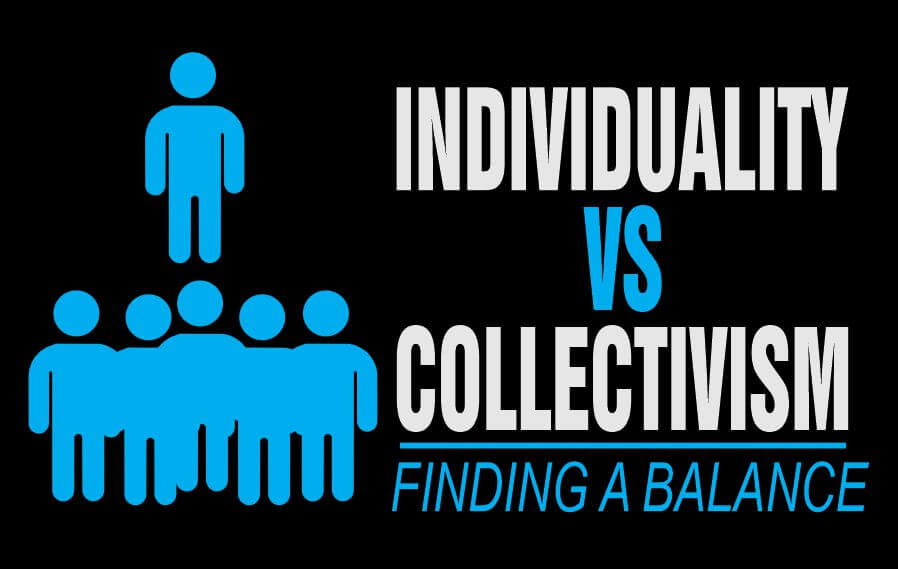
Individuality vs collectivism describes the contrast between valuing the person as an independent self and valuing the group as the main source of identity and duty.
Every culture blends both values, but most societies lean noticeably in one direction.
Kemi’s parents expected five hundred guests because a wedding joins two families and whole communities.
Ryan’s parents expected about eighty, because to them a wedding mainly celebrates the couple.
Their marriage shows both value systems at work, and it runs through every section below.
This walks you through the key differences, the strengths and weaknesses of each, what research reveals, and how families can balance both.
Table of Contents
Individuality and Collectivism at a Glance
Individuality is about a person’s distinct values, tastes, and choices, and the wider cultural value of individualism puts personal freedom first.
Both ideas are covered in depth in what individuality is and what individualism is.
Collectivism puts the family, the community, or the wider group ahead of personal wishes, and group harmony usually matters more than personal preference.
The full picture of how this value system works is available in collectivism and collectivist culture.
Every culture blends both values, but most societies lean noticeably in one direction.
Neither value system is better in every way, and each one carries real costs. Kemi and Ryan discovered both sides of that trade-off within their first year together.
The rest of this post compares the two value systems side by side, one area at a time.
Differences Between Individualism and Collectivism
How people see themselves
In individualist settings, people tend to describe themselves by their personality, interests, and personal achievements.
In collectivist settings, people tend to describe themselves by family, community, and their role within the group.
When Ryan introduced himself to Kemi’s relatives, he mentioned his job, while her uncles asked about his father and hometown first.
How decisions are made
Individualists tend to make major life decisions alone or together with a partner.
Collectivists tend to consult parents, elders, and extended family before committing to anything big.
When Kemi received a job offer in another state, she called her parents and two uncles, while Ryan expected the two of them to decide over dinner.
Family duty and money
In many collectivist cultures, adult children support parents and relatives financially as a matter of honor.
Kemi sent money home every month, which Ryan first saw as a large expense rather than a family obligation.
Communication style
Individualist cultures tend to value direct speech, while collectivist cultures tend to value tact and indirect hints that protect harmony.
Kemi’s mother never said she disliked a wedding venue, but her long silence said everything.
Privacy and personal space
Individualists tend to guard their personal time, privacy, and living space very carefully.
After their first child arrived, Kemi’s mother stayed for three months to help, a common West African custom that Ryan initially found overwhelming.
Success and achievement
In individualist cultures, success tends to belong to the person who earned it.
In collectivist cultures, success belongs partly to the family and community that supported it.
Ryan’s promotion was celebrated quietly at home, while Kemi’s graduation was celebrated by dozens of relatives.
| Area | Individualism | Collectivism | Kemi and Ryan’s example |
|---|---|---|---|
| Self-identity | Defined by traits and goals | Defined by family and roles | Job versus family background |
| Decisions | Made alone or as a couple | Made with family input | The out-of-state job offer |
| Money | Personal or couple’s resources | Shared family obligation | Monthly money sent home |
| Communication | Direct and explicit | Tactful and indirect | Her mother’s silent disapproval |
| Privacy | Personal space protected | Shared space expected | A three-month family visit |
| Success | Belongs to the achiever | Shared with the family | Quiet promotion, large graduation party |

Strengths and Weaknesses of Each
Strengths of individualism
Individualism tends to encourage creativity, personal responsibility, and freedom to choose one’s own path.
People can leave unhealthy situations and pursue goals their families might not have imagined.
Weaknesses of individualism
The same freedom can bring loneliness, weaker family support, and pressure to succeed entirely alone.
The extreme version of this outlook is described in more depth in rugged individualism.
When Ryan lost a contract, he hid his stress for weeks instead of asking his family for help.
Strengths of collectivism
Collectivism tends to provide strong safety nets, deep belonging, and help during hard times.
When the baby arrived, Kemi never cooked a single meal for six weeks.
Weaknesses of collectivism
Group expectations can limit personal choices, silence disagreement, and create heavy financial pressure.
Some people feel they cannot pursue a career, partner, or faith that the family disapproves of.
Healthy personal boundaries help protect personal choices without breaking precious family bonds.
What Research Finds
Different cultures appear to produce very different ideas about what a self actually is.
In an influential paper by Hazel Markus and Shinobu Kitayama, the authors contrasted an independent self, common in Western cultures, with an interdependent self.
They argued that these different selves influence how people think, feel, and stay motivated.
Even small everyday choices, like picking a pen, can quietly reflect these deeper cultural values.
In studies by Heejung Kim and Hazel Markus, East Asian participants tended to prefer options representing conformity, while European Americans preferred options that stood out.
However, a large replication led by Tobias Otterbring found the same pattern with a much smaller effect.
Striking differences can also appear between neighboring regions within a single large country.
In research by Thomas Talhelm and colleagues involving 1,162 Chinese students, people from rice-farming regions thought more interdependently than people from wheat-farming regions.
These studies looked mainly at Asian and Western samples, and African cultures have their own blends.
Still, they show that culture, history, and even farming can influence how people balance self and group.
Individuality vs Collectivism at Work
These same values also appear clearly in the workplace, from meetings to performance reviews.
Individualist offices tend to reward personal achievement, open debate, and self-promotion, while collectivist offices tend to reward loyalty, teamwork, and respect for seniority.
Kemi noticed this difference sharply during her very first performance review in America.
Her manager expected her to list her personal wins, yet she kept crediting her team instead.
Ryan gently coached her to describe her own contribution without feeling boastful or disloyal.
Global teams work best when managers recognize both styles and reward each fairly.
Quiet contributors from collectivist backgrounds may be doing excellent work without announcing it.
No Culture Is Purely One or the Other
Every society mixes both values, and every family has its own blend.
Many Americans are deeply loyal to family, while many young Nigerians value personal ambition and independence.
Different generations can also hold very different values within the same home.
Kemi’s younger brother, raised partly in Britain, was far more individualistic than her parents, yet he still sent money home faithfully.
The way people hold both a personal and group sense of self is covered in personal identity vs social identity.
How to Balance Individuality and Collectivism
Name the values behind the conflict
Many family disagreements are really hidden clashes between the values of independence and loyalty.
Once Kemi and Ryan saw their guest list fight that way, they stopped calling each other unreasonable.
Respect the other side’s logic
Both value systems make good sense within their own history, economy, and setting.
Strong cultural awareness helps you see wisdom in values that differ from yours.
Agree on shared rules
Kemi and Ryan agreed to discuss big decisions as a couple first, then share them with family for advice.
That one simple rule quietly ended most of the arguments that kept recurring between them.
Set a clear budget for family support
They agreed on a fixed monthly amount for Kemi’s parents, which removed tension from every transfer.
Ryan later admitted that he admired how much her family looked after each other.
Talk openly with family
Honest family communication helps relatives accept new boundaries without feeling rejected or pushed aside.
Kemi described the couple’s new rules to her mother gently, in a long phone call.
Blend traditions creatively
The couple held a large traditional ceremony and a small private dinner. Both families felt honored, and the couple felt true to themselves throughout the celebrations.
Conclusion
Kemi and Ryan’s guest list fight ended with two celebrations, and their marriage now blends both value systems with surprising ease.
Individuality vs collectivism is less a battle between right and wrong than a balance between freedom and belonging.
Each tradition offers real strengths and real costs, and most families live somewhere in the middle.
When their son was born, his grandparents chose his Yoruba name, while Kemi and Ryan chose his English one.
This week, identify one family tension that might be a clash between independence and loyalty.
Frequently Asked Questions
What is the difference between individualism and collectivism?
Individualism values personal freedom, self-expression, and independent decisions over the expectations of the group. Collectivism values family, community, and harmony, with people defined through relationships and shared duties.
Which countries are individualistic or collectivistic?
The United States, Britain, Canada, and Australia tend to lean toward individualistic values. Many Asian, African, and Latin American cultures lean collectivistic, though every country blends both values.
Is individualism better than collectivism?
Neither value system is better than the other in every possible way. Individualism encourages freedom but can bring loneliness, while collectivism offers belonging but can limit choice.
How can couples from different cultures balance both values?
Name the values behind each conflict, and respect both perspectives without judging either one. Agree on shared decision rules, set clear family budgets, and blend traditions creatively.

Pious Clements writes about character, conduct, and the deeper questions of how a life is lived. He is the founder of The Conducts of Life, a site built on the belief that how you behave, not what you achieve, defines who you are. His writing draws from decades of observation, lived experience, and serious thinking about human nature, ethics, and self-development. He writes to be useful, not popular.