Last updated on October 8th, 2026 at 01:14 pm
My cousin’s friend Maya spent her early twenties in Toronto borrowing everything, from her sister’s style to her parents’ career plans. Discovering her individuality took a burnout, a sketchbook, and one honest conversation at Sunday dinner.
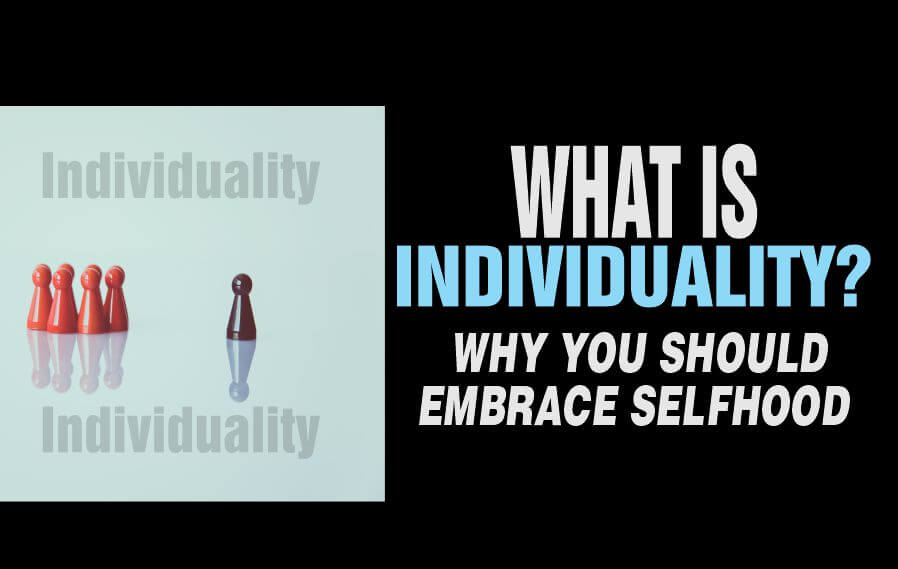
Individuality is the set of qualities, values, tastes, and choices that make a person distinct from everyone else, and the willingness to live by them.
It shows in what you believe, how you think, what you enjoy, and the decisions you make when nobody is steering you.
Maya had plenty of talent, but for years almost none of her choices were truly her own.
Her slow and sometimes painful journey toward herself runs through every section that follows.
You will learn the key elements of individuality, what blocks it, what research says, and how to build yours without losing loved ones.
Table of Contents
What Is Individuality?
Individuality is the expression of your genuine self through your values, opinions, preferences, and actions.
It is less about being different for its own sake and more about being honest about who you are.
At university, a close friend once described Maya as “a mix of everyone she hangs out with.”
She laughed at the time, but the comment stung. It named something she had sensed for years: that she adapted so quickly to others that she rarely knew her own preferences.
Individuality sits close to identity, which covers how you see yourself and how others see you.
The broader picture is covered in what identity is, while individuality is about how that identity is expressed in daily life.
Individuality, Individualism, and Selfishness
These three ideas are easy to confuse, especially for people raised in close-knit families.
Individuality describes a person’s distinct character, while individualism is a cultural or political value that prizes personal freedom and self-reliance.
The broader cultural idea is covered in more depth in what individualism is.
Selfishness is something else entirely, because it means putting your wants above other people’s needs.
Maya feared that choosing her own path would make her selfish toward her parents, who had sacrificed a great deal for her education.
In time, she discovered that being honest about herself actually made her a more generous daughter.
Key Elements of Individuality
Personal values
Values are the principles that guide your choices when no one is watching.
Maya eventually realized that creativity and honesty mattered to her far more than status or a predictable salary.
Independent opinions
Individuality includes forming your own views instead of borrowing them from the loudest voice.
In team meetings, Maya used to wait and then agree with whoever spoke first.
Building independent thinking slowly helped her trust her own judgment in those meetings.
Personal tastes and preferences
Your favorite music, food, clothing, and hobbies all express who you are. Maya had listened to her sister’s playlists for so long that she was surprised to discover she preferred old jazz.
Self-expression
This covers how you show yourself to the world through style, speech, art, and work.
For Maya, a pocket sketchbook became her most honest form of self-expression.
Life choices
Career, relationships, faith, and where you live are the biggest expressions of individuality. Maya’s choice to study accounting had been her parents’ dream, not her own.
| Element | What it means | Maya’s example |
|---|---|---|
| Values | Principles that guide your choices | Creativity and honesty over status |
| Opinions | Views formed through your own thinking | Stopped echoing the first speaker |
| Tastes | What you genuinely enjoy | Discovered a love of old jazz |
| Self-expression | How you show yourself to the world | Daily sketching in a pocketbook |
| Life choices | Career, relationships, and lifestyle | Rethought an accounting career |
Signs of Strong Individuality
People with healthy individuality tend to make decisions based on their values rather than fear of judgment.
They can disagree respectfully, enjoy their own company, and admit what they like even when it is unpopular.
They also stay open to other views because confidence in themselves makes other people’s opinions less threatening.
Maya noticed this in her illustration teacher, who wore paint-stained clothes to every class and listened warmly to every student.
On the other hand, people with weak individuality tend to struggle with small decisions, change opinions to match the room, and feel lost when alone.
Maya recognized almost every one of these signs in herself during her first year of work.
What Blocks Individuality?
Family expectations
Loving families sometimes map out a child’s future with the best intentions.
Maya never felt forced, yet she knew how much accounting meant to her parents.
Fear of rejection
Many people hide their real opinions to avoid conflict, awkward silences, or quiet disapproval.
Maya stayed quiet in meetings because she feared sounding foolish in front of senior colleagues.
Comparison on social media
Constant scrolling makes it easy to copy other people’s lives instead of building your own.
Maya once spent a whole weekend redecorating her flat to match an influencer’s apartment.
Mindful social media habits leave far more room for your own tastes to grow.
Following the crowd
Group pressure quietly pulls people toward the same clothes, opinions, and goals.
The risks of this pattern are covered in herd mentality and the dangers of following the crowd.
What Studies Have to Say
Living by your own choices appears to be closely linked to long-term wellbeing and motivation.
In a landmark paper by Richard Ryan and Edward Deci, self-determination theory proposed three basic psychological needs, namely autonomy, competence, and relatedness.
When these needs were met, people tended to show stronger motivation and better mental health.
Maya’s experience fits that pattern closely, even though she could not name it at the time.
During her accounting internship, she was competent and well liked, yet she felt drained because so little of the work reflected her own choices.
Authenticity, which is closely tied to individuality, also seems to matter a great deal for wellbeing.
In research by Alex Wood and colleagues, people who lived more authentically reported higher self-esteem and greater wellbeing.
People who felt alienated from their true selves tended to report noticeably lower wellbeing.
These studies mostly used Western samples, and cultures differ in how much they value standing out.
The cultural contrast is covered in more depth in individuality vs. collectivism.
How to Develop Your Individuality
Write down your values
List the five things that matter most to you, then compare them with how you actually spend your time.
Maya’s list showed creativity at the top, yet she spent almost no time creating anything.
Make small choices on your own
Order a meal, pick a film, or plan a weekend without asking anyone for approval. These small, everyday decisions slowly build the confidence you need for bigger ones later.
Spend time alone
Solitude gives you space to notice what you think and feel without outside noise. Maya began spending Saturday mornings at a quiet café, sketching strangers and the street outside.
Share one honest opinion each day
Start with low-stakes topics, then build up to work and family conversations. Within two months, Maya was contributing ideas in meetings instead of simply agreeing.
Know yourself more deeply
Strong self-awareness helps you separate your real preferences from habits you absorbed from others.
Regular journaling and honest feedback from trusted friends both help with this process.
Choose people who accept the real you
Spend more time with friends who encourage growth and less with those who demand sameness.
Maya joined a weekend illustration class and found people who shared her interests.
Honor your roots while choosing your path
Developing your individuality does not require rejecting your family, your culture, or your faith.
Maya kept her Sunday dinners, and that is where she finally told her parents about her love of illustration.
Her father went quiet, but her mother asked to see the sketchbook that same evening.
Individuality and Belonging
Humans need both a strong sense of self and a sense of belonging. Too much conformity can erase your identity, while too much effort spent standing out can isolate you from others.
The healthiest kind of individuality tends to grow inside caring and accepting relationships.
When the need to be different becomes extreme, it can turn into the pattern covered in the individuality complex.
Losing yourself in the opposite direction has its own costs, as described in ways people lose their individuality.
Conclusion
Maya once seemed like a mix of everyone around her, until she slowly learned to choose for herself.
Today she works as a freelance illustrator, and she still keeps a few bookkeeping clients, which pleases her parents.
Individuality grows through small, honest choices that reflect your values, tastes, and opinions.
It does not require rebellion, only the courage to be truthful about who you are.
Now is the time to take that step. Write down your five core values and make one choice that reflects them.
Frequently Asked Questions
What is individuality?
Individuality is the set of values, opinions, tastes, and choices that make a person distinct. It also includes the courage to express those qualities honestly in everyday life.
What is the difference between individuality and individualism?
Individuality describes a person’s distinct character, values, and the way they express themselves. Individualism is a cultural value that prizes personal freedom and self-reliance over group expectations.
Why is individuality important?
Individuality helps you make choices that fit your values, which tends to support motivation and wellbeing. Research links authentic living with higher self-esteem and greater overall life satisfaction.
How can I develop my individuality?
Write down your values, make small decisions on your own, spend time alone, and share honest opinions. Choose friends who accept you, while still honoring your family and roots.

Pious Clements writes about character, conduct, and the deeper questions of how a life is lived. He is the founder of The Conducts of Life, a site built on the belief that how you behave, not what you achieve, defines who you are. His writing draws from decades of observation, lived experience, and serious thinking about human nature, ethics, and self-development. He writes to be useful, not popular.