
Last updated on September 26th, 2026 at 04:45 pm
Your heart races before a hard conversation. Your chest tightens at bad news. A song lifts your whole afternoon. Emotions arrive uninvited, yet they quietly steer your attention, choices, and relationships more than almost anything else in your daily life.
Emotional feelings are the body and mind’s rapid responses to events that matter to you, and feelings are your conscious experience of those responses.
Together they signal what is important, prepare you to act, and connect you with other people.
This guide explains what emotions are, how they differ from feelings and moods, what science says about where they come from, and the main types you experience.
It also shows how feelings influence decisions, relationships, health, and communication, with links to deeper guides on each topic.
The author is not a licensed psychologist, so scientific claims rely on published peer-reviewed research.
Table of Contents
What Are Emotions?
Emotional feelings are short-lived, whole-body responses to situations you judge as important, involving changes in physiology, thoughts, facial expressions, and urges to act.
Fear before an exam, anger at unfair treatment, and joy at good news all follow the same basic pattern of trigger, bodily change, and readiness to respond.
Psychologist Paul Ekman described emotions as having rapid onset, short duration, and automatic appraisal, which distinguishes them from longer moods.
Feelings are not random, because each one reflects something your mind has judged as relevant to your safety, goals, or relationships.
Emotions vs Feelings vs Moods
People use these three words interchangeably, but separating them helps you describe your inner life more accurately.
| Emotion | Feeling | Mood | |
|---|---|---|---|
| What it is | A rapid bodily and mental response to a trigger | Your conscious experience and interpretation of the emotion | A lower-intensity state that lingers |
| Duration | Seconds to minutes | Can outlast the emotion | Hours to days |
| Clear cause? | Usually yes | Usually yes | Frequently no |
| Example | Your heart pounds when a car swerves | Afterward, you feel shaken and unsafe | You stay irritable all day without knowing why |
Neuroscientist Antonio Damasio drew a similar line, treating emotions as bodily reactions and feelings as the mind’s perception of those reactions.
In simple terms, an emotion happens to you, a feeling is how you experience and label it, and a mood is the background weather that remains.
Here are two more examples: fear is the emotion when a dog lunges at you, while feeling nervous around dogs for days afterward is the lingering feeling.
Grief is an emotion at the moment of loss, while the heavy feeling of missing someone can continue long after the initial wave has passed.
Where Do Emotions Come From? Two Scientific Views
Scientists still debate what being emotional fundamentally is, and honesty requires presenting both leading views.

The basic emotions view, associated with Ekman, holds that a small set of emotions evolved to handle life’s recurring challenges and appear across cultures.
The constructed emotion view, developed by neuroscientist Lisa Feldman Barrett, argues that the brain builds emotions by predicting and categorizing bodily sensations using experience and concepts.
Both views agree that the emotional landscape involves the body, the brain, and meaning, but they disagree about how fixed or flexible emotion categories really are.
For everyday purposes, the practical lesson is similar: noticing your bodily signals and naming them accurately changes how you experience and handle them.
What Happens in the Body
When something matters to you, your brain rapidly shifts your heart rate, breathing, muscle tension, and hormones to prepare you for action.

Fear speeds the heart and sharpens attention, while sadness tends to slow you down and turn attention inward.
These reactions have deep evolutionary roots, which our guide to primal instincts and survival drives explains in more detail.
Learning to read these physical signals is a skill, covered in our guide to the mind-body connection.
When the alarm overwhelms reasoning entirely, the result is what our article on what emotional hijacking looks like describes.
Types of Emotions
Emotional feelings are commonly grouped into basic emotions, complex emotions, and categories based on how pleasant and how intense they feel.

Basic and Complex Emotions
Ekman’s research identified a set of basic feelings, including joy, sadness, anger, fear, surprise, and disgust, with recognizable facial expressions across cultures.
Complex emotions such as guilt, shame, pride, jealousy, gratitude, and awe build on these foundations and depend heavily on thought, memory, and social context.
Pleasant, Unpleasant, Calm, and Intense
Many researchers also describe emotional feelings along two dimensions: how pleasant or unpleasant they feel, and how calm or activated they are.
Contentment and excitement are both pleasant, but excitement carries far more energy, just as sadness and panic differ in intensity despite both feeling unpleasant.
Examples of Common Emotions and What They Signal
Each emotional feeling carries information, and learning its usual message makes the emotion easier to use wisely.
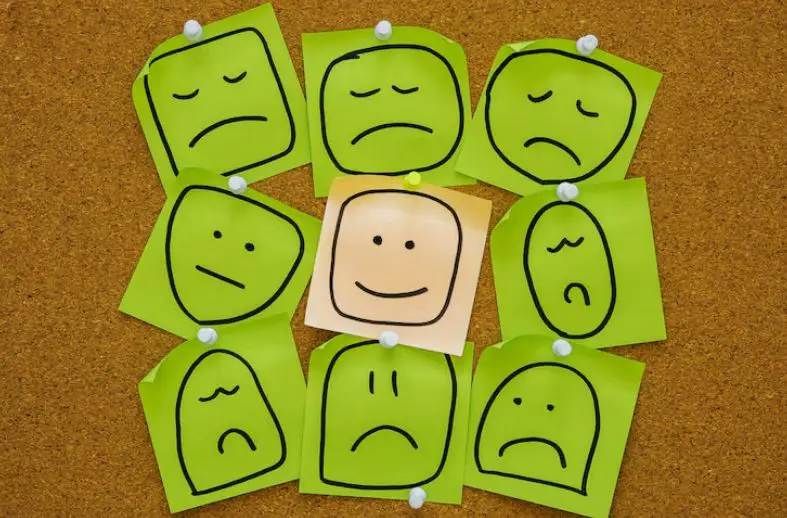
- Joy signals that something is going well, encouraging you to repeat the experience and share it with others.
- Sadness signals loss or disappointment, slowing you down and inviting comfort, reflection, and support from people you trust.
- Anger signals a blocked goal or perceived unfairness, providing energy to protect boundaries or correct wrongs.
- Fear signals possible danger, sharpening attention and preparing your body to avoid or escape harm.
- Disgust signals contamination or moral violation, pushing you away from things that seem harmful or wrong.
- Guilt signals that you may have harmed someone, motivating apology, repair, and better behavior next time.
What Emotions Are For
Emotional feelings exist because they helped our ancestors survive and live together, and they still serve three main purposes today.
They inform you, highlighting what matters before slower reasoning has finished analyzing the situation.
They motivate you, supplying energy to approach good things, avoid threats, and correct problems.
They communicate your inner state to others through facial expressions, tone of voice, and posture, which supports trust and cooperation.
How Emotions Influence Your Life
Decisions
A major review in the Annual Review of Psychology concluded that emotional feelings are powerful, pervasive, and predictable drivers of decisions.
This post on how feelings steer your choices explains when emotions help judgment and when they distort it.
Relationships and Empathy
Emotional feelings are the language of close relationships, and reading them in others is the foundation of trust and care. Read more on how to show empathy.
Communication
Tone, facial expression, and body language carry emotional meaning that words alone cannot, as our article on how human communication works explains.
Digital messages strip away many of these cues, which is why our article on the impact of tech on human interaction matters for emotional life online.
Mental Health
Persistent difficulty managing these feelings can contribute to, or signal, conditions such as anxiety and depression.
Our guide to emotions and mental health covers this relationship, and a licensed professional should assess any serious or ongoing concerns.
Culture
Culture influences which emotions people show openly, which ones they hide, and how they interpret the emotions of others.
How Emotions Develop Across Life
Emotional skills grow from infancy through old age, beginning with responsive caregiving and continuing through adolescence and adulthood.
Our full guide to emotional development across life covers each stage and what supports healthy growth.
Managing Your Emotions

Managing emotional expressions does not mean suppressing them, but noticing them early and choosing how to respond.
Naming what you feel is one of the simplest tools, and a 2007 brain imaging study found that labeling emotions in words reduced amygdala activity.
Pausing before reacting, questioning the story behind a feeling, and calming your body with slow breathing all strengthen regulation over weeks of practice.
Our guide to emotional regulation skills offers detailed techniques, while developing honest self-awareness builds the foundation for all of them.
If emotions regularly overwhelm your judgment or relationships, our article on low emotional intelligence explains common patterns and how to improve them.
Common Myths About Emotions
Several popular beliefs about the mechanics of emotions are misleading, and correcting them makes emotions far easier to work with.
The belief that negative emotional feelings are bad ignores their value, since sadness, anger, and fear all carry useful information about unmet needs.
The belief that strong people hide their feelings confuses suppression with strength, when honest expression usually builds deeper trust.
The belief that feelings always cloud judgment overlooks research showing they can also sharpen priorities and speed good decisions.
Emerson’s Perspective on the Inner Life
Ralph Waldo Emerson urged readers to trust their own inner experience rather than borrowed opinions, a theme central to his essay on self-reliance.
He closed that essay with the line “Nothing can bring you peace but yourself,” which our guide to Emerson’s essay on self-reliance examines alongside his wider philosophy.
I have noticed that his point applies directly to emotional life, because steadiness comes from knowing your feelings rather than waiting for circumstances to change.
Conclusion
Emotions are rapid, whole-body responses to events that matter, while feelings are your conscious experience of them and moods are the lingering background.
Scientists still debate if emotions are built-in programs or brain constructions, but both views agree they involve body, brain, and meaning.
Emotional feelings inform, motivate, and connect you, influencing decisions, relationships, communication, and health.
Learning to name and regulate them turns automatic reactions into choices.
Start today by pausing once when a strong feeling arrives, naming it precisely, and asking what it may be trying to tell you.
Frequently Asked Questions
What are emotions?
Emotional feelings are short-lived responses involving the body and mind that arise when something matters to you, preparing you to act and communicating your inner state to other people.
What is the difference between emotions and feelings?
An emotion is the rapid bodily and mental response to a trigger, while a feeling is your conscious experience and interpretation of that response, which can last longer.
What are the basic emotions?
Paul Ekman’s research identified joy, sadness, anger, fear, surprise, and disgust as basic emotions, although some scientists argue emotion categories are more flexible and more influenced by culture.
How can I manage my emotions better?
Name your emotions precisely, pause before reacting, notice bodily signals, question the story behind a feeling, and practice calming techniques like slow breathing during tense or stressful moments.
Disclaimer: This article is for informational and reflective purposes only and does not constitute mental health, psychological, or therapeutic advice. The author is not a licensed therapist or psychologist. Where content is based on personal observation or experience, the article states this clearly. If you are struggling with your mental health, please consult a qualified mental health professional.

Pious Clements writes about character, conduct, and the deeper questions of how a life is lived. He is the founder of The Conducts of Life, a site built on the belief that how you behave, not what you achieve, defines who you are. His writing draws from decades of observation, lived experience, and serious thinking about human nature, ethics, and self-development. He writes to be useful, not popular.