Last updated on October 7th, 2026 at 10:16 am
Three weeks after a painful breakup, I sat up at one in the morning and scrolled through our entire message history, from the first awkward hello to the last cold goodbye. It took two hours. I went to bed feeling worse than on the day she left.
Healing from heartbreak is the gradual process of recovering emotionally after a relationship ends: grieving the loss, letting go of the attachment, and rebuilding a life that feels whole again.
Time helps, but time alone is not the whole story. Certain habits feel comforting in the moment yet quietly keep the wound open.
What follows are the ten most common mistakes people make after a breakup, what research says about why they backfire, and what to try instead.
Table of Contents
What Research Shows
Heartbreak is not just an emotion. It acts on the brain much like withdrawal.
When Helen Fisher and colleagues scanned the brains of people recently rejected in love, viewing a photo of the former partner activated regions linked to reward, craving, and addiction.
That helps explain why checking up on an ex can feel irresistible, and why each look makes the craving stronger.
Contact through screens matters too. In a study of 464 people, Tara Marshall found that keeping tabs on a former partner through Facebook was linked to more distress, more negative feelings, more longing, and less personal growth after the breakup.
Even staying passive Facebook friends was linked to less growth.
How you think about your ex also counts. In an experiment with people recovering from breakups, Sandra Langeslag and her colleague found that dwelling on an ex’s negative traits reduced love feelings but left people in a worse mood.
Distraction with pleasant, unrelated thoughts improved mood without changing love feelings.
The researchers concluded that letting go takes repeated effort rather than a single switch.
These studies were small or relied on self-reports, and the brain scans involved only a few participants.
Still, they agree on one point: what you do in the weeks after a breakup can either feed the pain or help it fade.
Why These Mistakes Feel So Tempting
Every habit on this list makes sense in the moment. Checking their profile offers a brief hit of connection.
Rereading messages lets you visit the relationship one more time.
Staying busy until midnight keeps the quiet away. Each one trades a little relief now for a slower recovery later.
Knowing this makes the habits easier to catch. When you feel the pull to look, ask yourself what you are really hoping to feel.
Usually the answer is closeness, comfort, or certainty, and there are healthier ways to get each of those.
A close friend of mine kept a sticky note on her phone that simply said “What do I need right now?”
She says it stopped her from checking her ex’s page more times than she can count.
Stress makes all of these urges stronger, so basic stress management is part of heartbreak recovery too.
Sleep, movement, and time outdoors lower the background tension that drives impulsive choices.
10 Mistakes to Avoid When Healing From Heartbreak
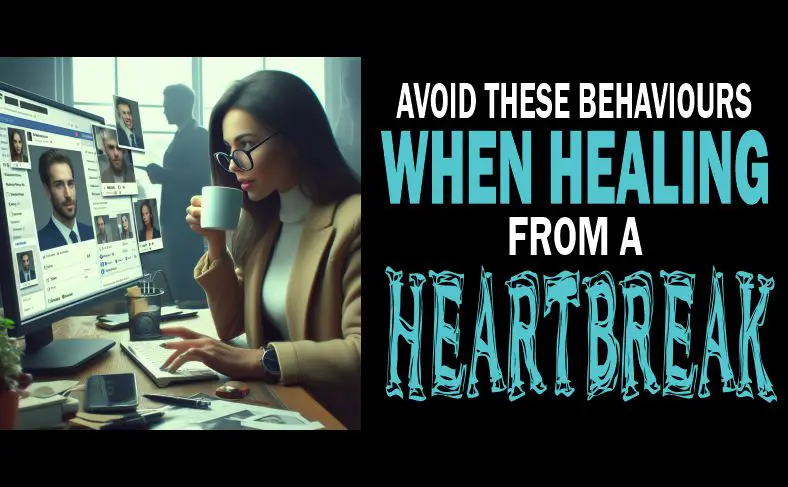
1. Checking their social media
It feels like a harmless glance. But every look restarts the craving cycle and invites painful comparisons, especially when you see them smiling without you.
Mute, unfollow, or block, at least for a while. You can always reconnect later if you choose.
Removing the temptation is kinder to yourself than relying on willpower at midnight.
2. Rereading old messages and photos
This was my mistake. Old messages freeze the relationship at its best moments and make the loss feel fresh.
Move them to a folder you do not open, or ask a friend to hold onto anything you cannot delete yet. You do not have to erase the past to stop living in it.
3. Staying in close contact too soon
Trying to stay friends right away keeps hope alive and delays acceptance.
Most people need a real break from contact before friendship is possible, if it ever is. If you must stay in touch because of children or work, keep it brief and practical.
4. Isolating yourself
Pain makes it tempting to hide. But isolation gives sad thoughts more room to grow.
Say yes to one invitation a week, call a friend you trust, or simply work from a café instead of your bedroom. Being around people helps, even when you do not feel like talking.
5. Numbing the pain
Alcohol, endless scrolling, working until midnight, or binge-watching every night can dull the hurt for a while, but they postpone healing rather than replacing it.
Feelings that are numbed tend to return later, sometimes stronger.
Gentle, steady habits from mental self-care for a sound mind work better than anything that simply switches the pain off.
6. Rushing into a rebound to erase the pain
A new relationship can feel like a cure, and for some people dating again does help them move on.
The problem comes when it is used to avoid grief altogether.
If you are dating to prove something to your ex or to avoid being alone with your feelings, the hurt will usually wait for you on the other side.
7. Making big decisions in the first weeks
Quitting your job, moving cities, or cutting off your whole social circle can feel like a fresh start, but decisions made in acute pain tend to be ones you regret.
Give yourself a few months before major changes, unless your safety or finances require them.
8. Rewriting the relationship in your head
Grief tends to polish memories. You remember the laughter and forget the arguments, the distance, and the reasons it ended.
Write a short, honest list of what was not working, and read it when nostalgia hits.
This is not about hating your ex. It is about seeing the relationship as it was.
9. Taking all the blame
Most breakups involve two people. Reflecting on your part is healthy, but blaming yourself for everything turns grief into shame.
Notice when your inner voice turns harsh, and use tools for overcoming negative self-talk to answer it more fairly.
Watch also for self-limiting beliefs such as “nobody will ever love me again,” which feel true but are not facts.
10. Putting a deadline on your grief
“I should be over this by now” adds a second layer of pain to the first. Healing is uneven.
Some days you will feel fine, and then a song in a shop will knock you sideways. That is not failure.
It is how grief works, and it tends to come in waves that grow smaller and further apart.
| Mistake | Try this instead |
|---|---|
| Checking their social media | Mute or unfollow for at least three months |
| Rereading old messages | Archive them somewhere out of reach |
| Staying in close contact | Take a clear break from contact |
| Isolating yourself | Accept one invitation each week |
| Numbing the pain | Choose one gentle habit that soothes |
| Rushing into a rebound | Date when you want someone, not to escape something |
| Big early decisions | Wait a few months before major changes |
| Idealizing the past | Keep an honest list of what was not working |
| Taking all the blame | Reflect fairly on both sides |
| Setting a grief deadline | Allow good days and bad days |
What Helps Instead
Avoiding mistakes is only half of healing. The other half is building something new.
Small, kind routines matter more than grand gestures, and little acts of self-kindness such as a walk in the sun, a favorite meal, or an early night can steady your days.
For the practical side, such as rebuilding routines, reclaiming your space, and finding your footing again, the steps in adapting to life changes after a breakup pick up where this list leaves off.
When I finally stopped rereading those messages, I replaced the habit with a short evening walk around my neighborhood.
It was not dramatic, but after a few weeks the craving to look back had faded, and the walk had become something I looked forward to.
If your relationship was controlling or abusive, healing can feel more confusing, because you may miss someone who hurt you.
Learning about the stages of trauma bonding can make sense of that pull.
For a marriage ending, coping with divorce and moving on covers the extra legal and family pressures.
Caring for your emotions during this time is a skill in itself, and emotional self-care offers a wider set of tools.
Conclusion
That night of rereading two years of messages taught me something I still remember: the things that feel most comforting after a breakup are sometimes the ones keeping the pain alive.
Healing from heartbreak is not about forcing yourself to feel fine.
It is about removing the habits that reopen the wound and giving yourself room to recover.
This week, pick one mistake from this list that you recognize in yourself, and replace it with the alternative in the table for seven days.
Frequently Asked Questions
How long does it take to heal from heartbreak?
There is no fixed timeline. Many people feel noticeably better within a few months, though longer or more intense relationships can take longer. Healthy habits tend to speed recovery.
Should I block my ex on social media?
Muting or blocking can help, at least for a while. Research links online monitoring of an ex with more distress and slower growth, so reducing exposure is usually wise.
Is it okay to cry every day after a breakup?
In the early weeks, yes. Crying is a normal part of grief. If deep sadness continues for many weeks or disrupts daily life, consider speaking with a professional.
Why can’t I stop thinking about my ex?
Heartbreak activates the brain’s craving and reward systems, much like withdrawal. Reducing reminders, staying busy with meaningful activities, and giving it time all help those thoughts fade.
Disclaimer: This article is for general information and is not a substitute for professional mental health advice. If heartbreak leaves you feeling hopeless or unable to cope, please reach out to a licensed therapist or a trusted support service in your area.

Pious Clements writes about character, conduct, and the deeper questions of how a life is lived. He is the founder of The Conducts of Life, a site built on the belief that how you behave, not what you achieve, defines who you are. His writing draws from decades of observation, lived experience, and serious thinking about human nature, ethics, and self-development. He writes to be useful, not popular.