
Last updated on October 2nd, 2026 at 09:12 pm
You love your friends, yet after a full Saturday of visits you find yourself craving an evening at home with a book and no conversation at all. Is that a sign of introversion, of shyness, or simply of being human?
Online quizzes make introversion sound simple, but many of the signs they list are flattering stereotypes that fit almost anyone.
The signs below stick to what introversion actually describes: a preference for calmer settings, smaller groups, and more time alone.
You will find which popular signs do not hold up, a way to tell introversion from shyness, and what it means if you only relate to some of them.
No checklist can diagnose your personality, but these markers can point you in the right direction.
For the bigger picture behind these signs, start with what an introvert personality is.
Table of Contents
What It Means to Be an Introvert
Introversion is the quieter end of the extraversion trait, one of the Big Five dimensions of personality.
Introverts tend to seek less stimulation, fewer people, and more solitude than extraverts, while still enjoying company in the right doses.
It is a preference, not a fear, which is the key to telling it apart from shyness later in this article.
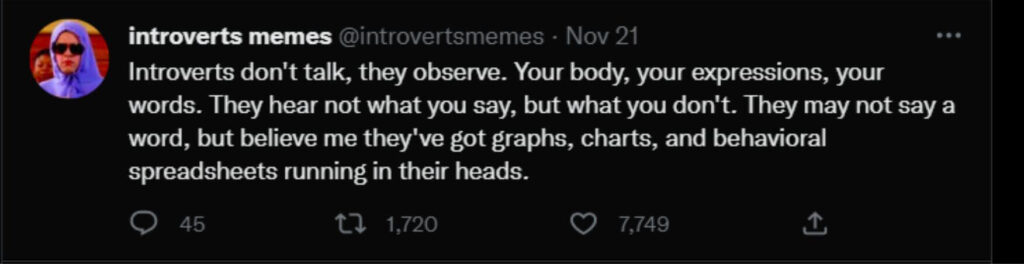

10 Signs You Are an Introvert
The more of these describe you consistently, across different settings and years, the more likely you lean introverted.
1. You Look Forward to Time Alone
After a busy stretch, you genuinely want quiet time by yourself, not as an escape from people but as something you enjoy. Everyone gets tired after heavy socializing, but introverts tend to seek out that solitude more and value it more highly.
2. You Prefer Small Groups to Big Crowds
A dinner with three friends appeals to you far more than a party of fifty, even if you know most of the guests.
3. You Would Rather Go Deep Than Wide
You enjoy long, meaningful conversations with one person more than quick chats with many. Interestingly, a University of Arizona study that recorded snippets of 79 people’s daily lives linked more substantive conversations with greater well-being.
A larger 2018 replication with 486 people confirmed that link, found no reliable link with small talk, and showed personality did not substantially change the pattern.
In other words, deep conversation seems good for nearly everyone; introverts may simply be more vocal about preferring it.
4. You Think Before You Speak
You tend to process ideas internally and speak once you have something considered to say, which can mean you miss your chance in fast discussions.
5. You Need Time to Warm Up
With new people you start reserved and open up gradually, becoming much more talkative once trust is built.
6. You Keep a Small Circle of Close Friends
You invest in a few deep friendships rather than a wide network, and you are happy with that. That fits a broader preference for one-on-one interpersonal communication over lively group chatter.
7. You Like Working Independently
Given the choice, you would rather handle a task on your own than in a noisy team brainstorm, and you may do your best thinking alone.
8. Busy Places Wear on You Sooner
Loud restaurants, crowded markets, and nonstop meetings feel tiring faster for you than for more outgoing friends.
9. You Do Not Seek the Spotlight
You can handle attention when needed, but you would not choose to be the center of every gathering.
10. Your Ideal Weekend Is Quiet
Your favorite free time involves reading, gardening, gaming, walking, or other low-key activities more than packed social calendars.
Popular “Signs” That Do Not Hold Up
Many introvert lists include traits like being unusually creative, observant, self-aware, detail-oriented, or an incredible listener.
These are wonderful qualities, but they are found in introverts and extraverts alike, so they do not tell you which way you lean.
Avoiding conflict and feeling uncomfortable in groups are also shaky markers, since they relate more to agreeableness, anxiety, or shyness than to introversion.
The genuine advantages introverts tend to bring are covered in the real strengths of introverts.
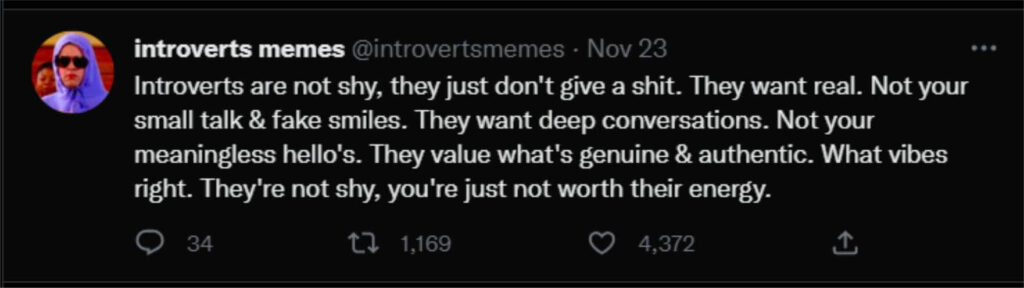

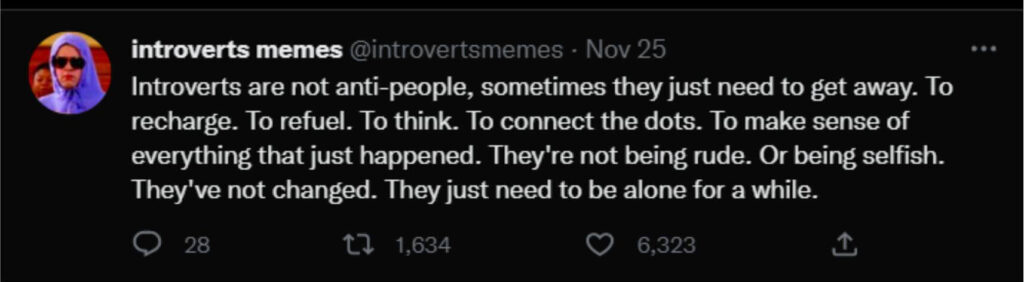
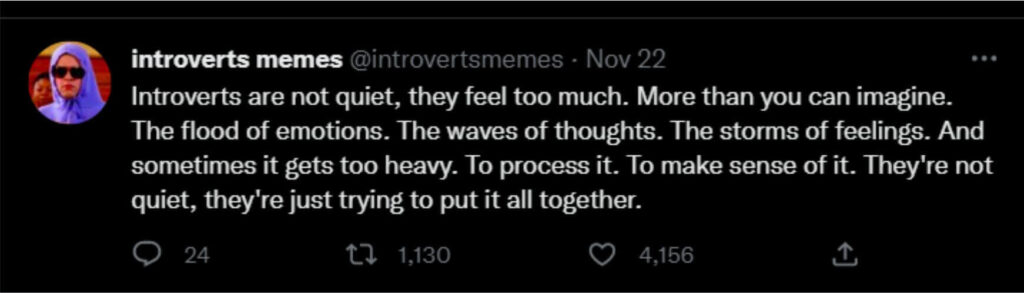
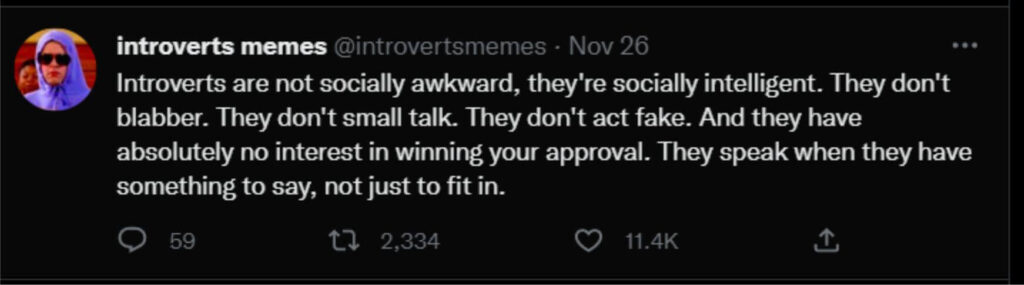
Am I an Introvert or Just Shy?
The simplest test is to ask why you avoid a social situation when you do. If you skip a party because a quiet evening simply sounds more appealing, that points to introversion.
If you skip it because you fear being judged or saying something awkward, that points to shyness.
| Question | Introversion | Shyness |
|---|---|---|
| Why do you avoid big gatherings? | You prefer quieter settings | You feel nervous or fear judgment |
| How do you feel alone? | Content and restored | Sometimes lonely, wishing you could join in |
| Do you want more social contact? | Usually no | Usually yes, but it feels hard |
| Can it change with practice? | The preference stays fairly stable | Nervousness usually eases with practice and support |
You can be both at once, and you can also be a shy extravert who craves company but struggles to reach for it.
If fear of judgment is intense, lasts for months, and keeps you from work, school, or relationships, it may be social anxiety, and a licensed therapist can help.
What If Only Some Signs Fit?
Relating to half of these signs is normal, since most people sit somewhere in the middle of the spectrum, a range sometimes called ambiversion.
You might also be one kind of introvert and not another, for example preferring solitude without any social nerves, or thinking deeply while still enjoying crowds.
In my observation, the most useful question is not “Which label am I?” but “Which settings bring out my best?”
How to Learn More About Yourself
A well-validated Big Five personality test gives a more reliable picture than viral quizzes, because it measures extraversion as a continuous score rather than a box.
You can also track your energy for two weeks, noting which activities leave you refreshed and which leave you depleted, a habit that fits naturally with reflective journaling habits.
Once you know where you stand, the tips on building friendships as an introvert offer ways to connect without draining yourself.
Conclusion
Wanting a quiet evening after a full Saturday of visits does not make you antisocial, but if it is a steady preference, it may well mean you lean introverted.
The clearest signs are a preference for solitude, small groups, deep conversation, and calmer settings, not flattering traits that anyone can have.
Introversion is a preference and shyness is a fear, and you can have either, both, or neither.
Over the next two weeks, jot down which activities refresh you and which drain you, and let that pattern answer the question.
Frequently Asked Questions
How do I know if I am an introvert?
You likely lean introverted if you consistently prefer time alone to recharge, small groups, deep conversations, and calm settings, and if you warm up slowly with new people.
What is the difference between an introvert and a shy person?
An introvert prefers quieter settings and less stimulation, while a shy person feels nervous or fears harsh judgment in social situations, even if they actually want more company.
Can you be an introvert and still like people?
Yes, many introverts enjoy people and value their close relationships deeply; they simply tend to prefer smaller doses of socializing and fewer, deeper friendships over large, noisy crowds.
What is an ambivert?
An ambivert is someone who naturally sits in the middle of the introversion-extraversion spectrum, enjoying both social time and solitude depending on the setting and their current mood.

Pious Clements writes about character, conduct, and the deeper questions of how a life is lived. He is the founder of The Conducts of Life, a site built on the belief that how you behave, not what you achieve, defines who you are. His writing draws from decades of observation, lived experience, and serious thinking about human nature, ethics, and self-development. He writes to be useful, not popular.