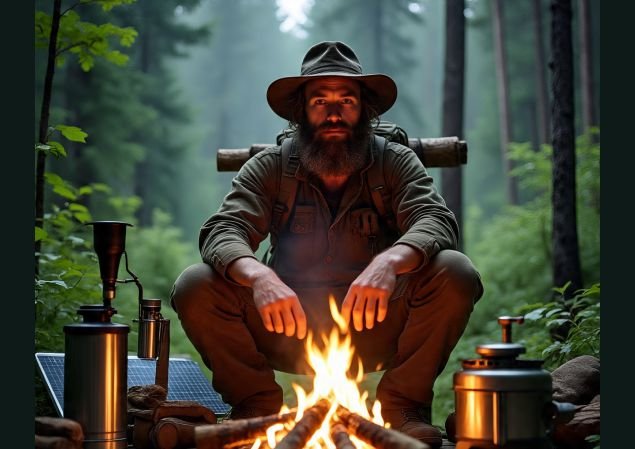
These 10 weird reasons people live off-grid will make you question why anyone leaves modern life for total independence and silence.
In learning how to live, people devise many ways to satisfy their life in one way or another.
Off-grid living is usually framed around survival skills, lower bills, or environmental concern, but that view barely scratches the surface.
Step closer, and a stranger picture appears.
Many choices come from curiosity, personal beliefs, and impulses that make little sense to outsiders.
In the middle of this lifestyle shift sit the weird reasons people live off-grid, motivations shaped by silence, control, rebellion, and imagination.
Some seek freedom from clocks, rules, or digital noise.
Others chase odd passions, private experiments, or deeper meaning found far from crowds.
This lifestyle becomes a mirror, reflecting desires modern life rarely allows. Let’s take a closer look.
Table of Contents
An Overview of Off-Grid Living
Off-grid living refers to a lifestyle built without reliance on public utilities such as electricity, water supply, gas lines, or sewage systems.
Energy comes from solar panels, wind turbines, or generators, while water is sourced through rain collection, wells, or natural streams.
Food production, waste management, and heating are handled independently.
Many choose off-grid living to gain control over resources, reduce expenses, and limit dependence on centralized systems.
Daily life involves planning, maintenance, and practical skills. This way of living favors self-sufficiency, resource awareness, and a closer relationship with land, seasons, and personal responsibility. See an in-depth guide on living off-grid.
While popular reasons for living off-grid are understandable, there are some weird reasons people choose this type of living.
Let’s take a closer look:
Talking to Trees or Nature Spirits
One weird reason some people choose to live off-grid is to talk to nature: trees, spirits, rivers, and the land itself.
Away from traffic, screens, and constant voices, the natural world feels closer and more responsive.
While this might sound bizarre, it is actually what makes some people happy and fulfilled.
Silence stretches longer, and small sounds begin to feel meaningful rather than random.
Living this way changes how thoughts are processed.
Speaking out loud to a tree or stream becomes a way to reflect, release stress, or work through decisions.
For many, this practice replaces journals, therapy, or digital distractions.
Cultural traditions, folklore, and animist beliefs influence this behavior, shaping the idea that nature carries awareness and memory.
Simple rituals like morning walks, quiet observation, or spoken gratitude reinforce this bond.
Off-grid living then shifts from isolation to relationship.
The land stops feeling like property and starts feeling like a presence, offering calm, perspective, and a sense of belonging within a wider living system.
Related Posts
How to Live in a Camper in Winter
How to Live in an RV Full Time
How to Live Off the Grid in the City
How to Live Off the Grid with No Money
How to Live More Sustainably on a Budget
Testing Survival Skills Like a Game
Another reason some people choose to live off-grid is to test survival skills like a game they play against themselves.
While this reason sounds familiar, it is still weird to an extent.
Daily life becomes a series of challenges where progress is measured by ability, not convenience.
Fire, food, water, and shelter turn into tasks that demand focus and creativity instead of shortcuts.
Fire-making becomes a personal milestone. Using friction, flint, or natural materials requires patience and precision.
Success feels earned, not automatic. Food foraging adds another layer, requiring knowledge of local plants, seasons, and safe harvesting.
Each meal feels intentional, tied directly to effort and awareness of the land.
Shelter building completes the challenge. From temporary structures to permanent cabins, every decision tests problem-solving and planning. Mistakes teach fast lessons.
Wins build confidence. Off-grid living then feels like a long-term survival game, one that sharpens instincts, rewards discipline, and proves how capable the human body and mind can still be without modern systems.
Avoiding the Concept of Time
How weird is it to decide to live off-grid just to avoid the concept of time?
Yes! There are stories of people who also live off-grid because they want to step away from the idea of time as a ruler of daily life.
Clocks, alarms, and deadlines fade into the background, replaced by daylight, weather, and physical cues.
Mornings begin with sunrise, not notifications. Rest comes when the body feels ready, not when a schedule demands it.
Living this way shifts how days are experienced. Work happens when light allows.
Meals follow hunger, not fixed hours. Seasons become more noticeable, shaping routines through temperature, rainfall, and harvest cycles. This rhythm feels slower but more deliberate.
Without constant time pressure, stress levels tend to drop. Tasks no longer compete for minutes and deadlines.
Attention stays on the present moment instead of the next obligation.
Off-grid life then becomes less about managing hours and more about responding to real needs, creating a calm, grounded relationship with daily living and natural flow.
Creating Spaces for Animal Companions
Another weird reason some people move off-grid is to build a life where animals are part of daily rhythm, not a limitation.
Open land and fewer restrictions make room for companions that city living rarely allows.
Goats, pigs, ducks, or large birds fit naturally into wide spaces where movement and natural behavior matter.
Caring for these animals goes beyond companionship. Goats help manage land. Chickens handle food scraps.
Animals become partners in daily routines rather than background pets.
This shared responsibility deepens connection and brings structure to off-grid days.
Living off-grid also allows spaces to be designed around animal needs.
Shelters, grazing areas, and water access are built with intention instead of compromise.
Noise rules and space limits disappear. In return, animals thrive, routines feel grounded, and the home becomes a small ecosystem.
For many, this freedom to live alongside animals, on equal terms with the land, is reason enough to step away from the grid.
Conducting DIY Experiments on Human Behavior
For some, off-grid living becomes a testing ground for how people act when modern systems disappear.
Small communities form with shared land, shared work, and shared responsibility.
Without banks, rigid laws, or formal hierarchies, daily life turns into a living experiment.
Barter replaces money. Skills gain value over status. Decisions about food, labor, and space reveal how cooperation holds up under pressure.
Conflicts surface faster, but so do solutions. Rules are written, changed, or removed as consequences become visible in real time.
Different forms of leadership are tried. Consensus, rotating roles, or complete autonomy each reshape group dynamics.
Living this way exposes habits people carry from mainstream society and how quickly those habits change when resources are limited.
Off-grid experiments strip behavior down to essentials, offering raw insight into trust, fairness, and the balance between personal freedom and collective survival.
Extreme Minimalism Challenges
For some off-grid dwellers, the real experiment isn’t survival, it’s subtraction.
Extreme minimalism turns daily life into a challenge where owning less becomes the point.
Limiting possessions to a few dozen items forces constant decisions about usefulness, durability, and trade-offs.
Without backups or excess, small mistakes matter. Tools must serve multiple purposes.
Clothing, shelter, and food systems are designed for function, not comfort.
Many minimalists end up building what they need from scratch, learning carpentry, sewing, or metalwork out of necessity rather than as a hobby.
This lifestyle exposes how dependent modern living is on convenience. Time replaces money. Skill replaces shopping.
Scarcity sharpens awareness of the environment, from seasonal food cycles to energy use.
Extreme minimalism off-grid isn’t about deprivation, it’s about pressure-testing how little is truly required to live, work, and stay sane when comfort is no longer guaranteed.
Running Away from Modern Sounds: Avoiding Modern Sounds
This seems to be the weirdest reason people live off-grid. Constant city noise, honking cars, sirens, and crowded streets can overwhelm the senses.
Off-grid life offers a retreat where silence dominates, and every sound carries meaning.
Rustling leaves, bird songs, or a flowing stream replace urban chaos, turning daily life into a mindful experience.
Silence becomes a tool for reflection, focus, and mental clarity.
Meditation, thinking, or simple presence is easier when distractions vanish.
Without constant noise, the world slows down, and subtle sounds take on new value.
Living this way also reshapes priorities. Distractions fade, and attention shifts to essentials—food, energy, shelter, and the rhythms of nature.
Escaping modern sounds isn’t just about quiet; it’s a deliberate recalibration of daily life, heightening awareness, reducing stress, and creating a sensory environment that city life can never provide.
Freaky Energy or Magnetic Experiments
Another unusual reason people live off-grid is to test unconventional energy ideas, like DIY electricity systems and magnetic generators.
Remote locations give space and freedom to experiment without city regulations, building codes, or safety inspectors breathing down their necks.
Off-grid life becomes a hands-on lab for curiosity and innovation.
Some experimenters build homemade wind turbines, solar setups, or magnetic devices that promise unusual energy outputs.
Trial and error replaces formal labs, and successes feel like personal breakthroughs.
Mistakes can be messy or dangerous, but they teach lessons conventional environments rarely allow.
This lifestyle attracts those who crave autonomy, creativity, and technical challenges.
Living off-grid lets energy experiments merge with daily survival, where generating power isn’t just practical, it’s a playground for ideas, imagination, and testing the limits of science in a world free from conventional oversight.
Living Inspired by Characters
Some people choose an off-grid life to step into the shoes of fictional or historical characters they admire.
Stories of survivalists, adventurers, or wilderness dwellers spark the desire to replicate that lifestyle in reality.
Daily routines become mini-adventures, shaped by imagination and the lessons of these characters.
Fans of dystopian novels or survival films may embrace isolation, resourcefulness, and self-sufficiency, turning ordinary tasks, like gathering food, building shelters, or managing water, into exercises inspired by their favorite stories.
Historical figures, such as Thoreau in Walden, also motivate individuals to reject modern pressures and seek a closer connection to nature.
This form of off-grid living blends escapism with practicality. It’s not just mimicry; it’s an immersive experiment where life mirrors narrative.
Each day becomes a chapter of independence, creativity, and adventure, offering a unique way to interact with the environment while honoring the characters that inspired the lifestyle.
Extreme Food Control
Some people choose an off-grid life to take complete control over what they eat, growing or foraging nearly all their food.
Supermarkets and processed products are largely avoided, replaced by fruits, vegetables, herbs, and wild edibles cultivated or gathered by hand.
This approach gives full oversight of quality, freshness, and sustainability.
Homegrown and foraged foods also create a direct connection to the seasons and local ecosystem.
Daily routines revolve around planting, harvesting, and preparing meals, making nutrition an active part of life rather than a convenience.
Off-grid dwellers learn which plants thrive in their environment and how to use them efficiently, gaining both knowledge and independence.
Extreme food control isn’t just about health; it’s a statement of autonomy.
By managing the source and quality of every meal, individuals reduce reliance on industrial systems and supply chains, encouraging self-sufficiency, environmental awareness, and a lifestyle that is intentionally aligned with nature.
Conclusion
Weird reasons people live off-grid reveal just how diverse human motivation can be.
Beyond survival or saving money, people seek silence, autonomy, creativity, or unusual experiments.
From talking to trees to magnetic energy projects, each choice reflects a desire to step outside societal norms.
Off-grid living becomes a canvas for curiosity, personal philosophy, and unconventional lifestyles.
Whether testing survival skills, controlling food, or mimicking fictional characters, these motivations highlight the strange, fascinating ways humans interact with freedom, nature, and self-reliance.
The weirdness underscores a simple truth: life away from the grid can satisfy impulses modern society rarely allows, offering a space for imagination, reflection, and personal expression.
Frequently Asked Questions
What are some of the strangest reasons people live off-grid?
People live off-grid to talk to nature, run social experiments, test survival skills, avoid noise, emulate characters, or conduct unusual energy experiments.
Can off-grid living improve mental clarity?
Yes. Silence, reduced digital noise, and connection to natural rhythms can enhance focus, mindfulness, and a deeper sense of calm.
Do people really live off-grid for fictional inspiration?
Some do. Fans of novels, survival films, or historical figures replicate character routines, embracing self-sufficiency and adventure inspired by stories.
How extreme is food control off-grid?
Some off-gridders grow or forage all their meals, avoiding processed foods entirely, creating full autonomy over nutrition, quality, and sustainability.
References

Pious Clements is the insightful voice behind "The Conducts of Life" blog, where he writes about life ethics, self-development, life mastery, and the dynamics of people and society.
With a profound understanding of human behaviuor and societal dynamics, Pious offers thought-provoking perspectives on ethical living and personal growth.
Through engaging narratives and astute observations, he inspires readers to navigate life's complexities with wisdom and integrity, encouraging a deeper understanding of the human experience and our place within society.